Quotessence
Home / Quotes / Quote by Grayson Perry

Quote by Grayson Perry

“Psychologist Carl Rogers used the word ‘congruence’ when describing this relationship between the idealized self and the real self. Congruence is when the two selves fit harmoniously, when a person’s idealized self is congruent with their actual behavior. However, the idealized self is an often unreachable version of ourselves that we and society create while the real self is the messy, imperfect inner truth. We want to be the idealized version because we believe that society will then regard us positively, so we struggle to maintain a version that does not really fit.”

Quote by Grayson Perry

Work

The Descent of Man

Charles Darwin's 'The Descent of Man' delves into the evolutionary origins of human behavior, physiology, and intellect, drawing comparisons with other primates. The book is a comprehensive examination of the natural selection process and its impact on human development. more

Author

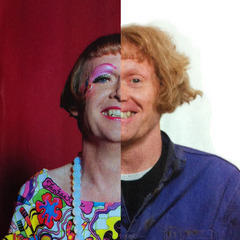
Grayson Perry
Grayson Perry

Grayson Perry is a British artist renowned for his ceramic works and television programs. His works often delve into social issues such as gender, class, and consumerism. Perry has gained widespread recognition in the art world and among the public with his unique style and profound insights. more

You May Also Like

“Alright I'll admit not all Americans are fucking stupid. I have respect for Carl Rogers, for example. Dude puts a lot of stock in Experience. Personal experience. And what has my experience been? Well. Russia was nice. I had two bicycles and girls liked me. What's not to like? Then they drag me here (Michigan). Make me work my ass off because parents are idiots and don't speak English. I don't get any pussy till 22. And now they say I still owe school loans? Honestly, I don't remember much of school. Seems like some kinda scam to me. What is to be concluded from this? Either my father is a piece of shit, or America is a shithole. Maybe both. Experience.”

“Social issues impact every business. Whether we're talking about womens health or education or economic equity or climate change or renewable energy... All of these things impact businesses and their ability to profit. And they all present business opportunities also. So there's a lot to consider at the intersection of business and social work. And you can't really care about business without also caring about people's well-being, so every entrepreneur should be a social entrepreneur trying to help other people live better lives in some way.”

“The first - the most obvious (test of a true social entrepreneur) - is are they possessed, really possessed by an idea... The idea - making it happen across society - is something they are married to in the full sense of the word. One key test of that is this: Is this an idea that you see growing out of their whole life? I get very, very suspicious when I see someone who had an idea two years ago. It just doesn't ring true. Because with the typical entrepreneur you can see the roots of the interest when they're very young. There's a real coherence to people's lives.”

“Entrepreneurial quality - is by far the toughest (criterion for a social entrepreneur).. For every one thousand people who are creative and altruistic and energetic, there's probably only one who fits this criterion, or maybe even less than that. By this criterion...we do not mean someone who can get things done. There are millions of people who can get things done. There are very, very few people who will change the pattern in the whole field.”

“Over the past century, researchers have studied business entrepreneurs extensively.. In contrast, social entrepreneurs have received little attention. Historically, they have been cast as humanitarians or saints, and stories of their work have been passed down more in the form of children's tales than case studies. While the stories may inspire, they fail to make social entrepreneurs' methods comprehensible. One can analyze an entrepreneur, but how does one analyze a saint?”