Quotessence
Home / Quotes / Quote by Saint Augustine

Quote by Saint Augustine

Work

The City of God

Written by Saint Augustine, this seminal work delves into the nature of the city, examining the contrast between the earthly city, characterized by sin and corruption, and the heavenly city, which embodies grace and eternal life. The book also addresses the role of the individual within these cities and the ultimate purpose of human existence. more
Author

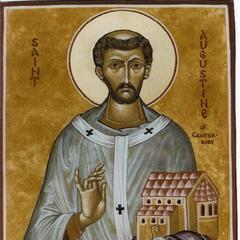
Saint Augustine
Saint Augustine

Saint Augustine, born on November 13, 354 in Tagaste, North Africa, and died on August 28, 430, was an influential Christian theologian, philosopher, and writer. He is considered one of the 'Fathers of the Church' and had a profound impact on Christian theology, philosophy, and Latin literature. His work 'Confessions' is a classic of Western literature, and his thoughts have had a lasting influence on Christian doctrine and Western culture. more

You May Also Like

“It would not do for the consumer to know that the hamburger she is eating came from a steer who spent much of his life standing deep in his own excrement in a feedlot, helping to pollute the local streams. Or that the calf that yielded the veal cutlet on her plate spent its life in a box in which it did not have room to turn around. Wendell Berry, "The Pleasures of Eating," What Are People For?, 1989 Jesus pioneered a relationship ethic based on compassion. Being a disciple means building relationships - with the Creator and with all creation and creatures.”

“Leaving the complications of the human breakfast-table out of account, in an elemental sense, the egg only exists to produce the chicken. But the chicken does not exist only in order to produce another egg. He may also exist to amuse himself, to praise God, and even to suggest ideas to a French dramatist. Being a conscious life, he is, or may be, valuable in himself.”

“O God, enlarge within us the sense of fellowship with all living things, even our brothers, the animals, to whom Thou gavest the earth as their home in common with us. We must remember with shame that in the past we have exercised the high dominion of man with ruthless cruelty so that the voice of the earth, which should have gone up to thee in song, has been a groan of pain. May we realize that they live, not for us alone, but for themselves and for Thee and that they love the sweetness of life.”

“Once we were happy in our own country and we were seldom hungry, for then the two-leggeds and the four-leggeds lived together like relatives, and there was plenty for them and for us. But the Wasichus came, and they have made little islands for us and other little islands for the four-leggeds, and always these islands are becoming smaller, for around them surges the gnawing flood of the Wasichu; and it is dirty with lies and greed.”

“People who blame the Bible for the modern destruction of nature have failed to see its delight in the variety and individuality of creatures and its insistence upon their holiness. But that delight-in, say, the final chapters of Job or the 104th Psalm-is far more useful to the cause of conservation than the undifferentiating abstractions of science... Reverence gives standing to creatures, and to our perception of them, just as the law gives standing to a citizen.”

“The animal creation shall again gladden a new Paradise as they did when Adam and Eve called them by name, and carressed them and mingled in their society. The Bible everywhere indicates that the new earth will be a counterpart of the old before the fall, so we must conclude that lower animals who were created before man and have been his companions before and since the fall will be restored with him in the "new Creation"”

“The love of a dog for his master is notorious; in the agony of death he has been known to caress his master, and everyone has heard of the dog suffering under vivisection, who licked the hand of the operator; this man, unless he had a heart of stone, must have felt remorse to the last hour of his life.”