Quotessence
Home / Quotes / Quote by Eddie Pepitone

Quote by Eddie Pepitone

“I actually have to consciously stay away from CNN and MSNBC because it will rot my brain and start having me agree with them as they have an argument between the right and the far right while making it seem they are righteous torch-bearers for democracy. Corporate media is insidiously numbing!”

Quote by Eddie Pepitone

Author
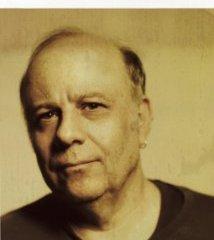
Eddie Pepitone
Eddie Pepitone

Eddie Pepitone, born on November 5, 1958, is an American actor known for his unique comedic style and humorous sense of humor. He has gained recognition for his roles in comedy films and television shows. more

You May Also Like

“To a certain extent all philosophers have been involved in a systematic questioning that undermines confidence and certainty. Philosophy as a whole unleashed skeptical forces which, outside of the tightly controlled environment of a rigorous philosophical debate, led a lot of people to throw their hands up in despair and think 'what's the point?'. A lot of the public perception of philosophy is that it leaves you with no answers, and more confused than you were at the beginning.”

“There have been a number of philosophers who have reveled in the dismantling of truth. I think they did so with good ethical motives, and for good philosophical reasons. I can see the sense in what they were talking about; the idea that truth is often claimed by elites in order to further certain agendas. They crowd-out alternative perspectives - particularly those of the powerless. But the undermining of truth contributed - in the weird, indirect way that philosophy contributes to the culture - to a rejection of the idea of truth as having any kind of proper meaning at all.”

“I don't think there is ever a direct connection between the philosophical community and the wider populus. I'm very aware of this because I've been working on a book on ideas in global philosophy and you always find some kind of relation between the dominant philosophies in a culture and the folk philosophy but it's not a straight-down dissemination. It's partly bottom-up. Thinkers are the products of the cultures they grew-up in. They aspire to thinking purely objectively and universally, but they are often reflecting ways of thought that are embedded in a culture.”

“A lot of religious belief - even the majority - involves making factual claims about the world which do come into conflict with science and history. For Christians, a test of this is the Empty Tomb. I ask Christians: 'are you saying that it does not matter - as a matter of fact - whether or not Christ's tomb was empty and that he was resurrected?' At that point, I find that, to a lot of them, it really does matter, despite all the fine talk about not wanting to confuse science and history with religion.”

“People seem very arrogant when they say 'I'm right and you're wrong', but in practice we all believe we're right. We have a staggering arrogance in our own belief. That can be tempered by not being 100% certain; by being provisional. No matter what the debate is, very few people have the modesty to suspend judgement on a whole range of things; most intelligent people have an opinion and are expected to have an opinion by other people - but it always requires making a personal judgement that goes way-beyond your expertise. We do it all the time.”

“I think the appropriate kind of skepticism is this: you've got to be asking questions all the time, you've also got to make sure that you're doing so in the spirit of genuinely wanting to find the answers - and that also means being open. I battle with this: I know I tend to be very skeptical and as a result, I veer towards the dismissive. But being aware of the tendency, I like to challenge my own skepticism and make sure it's not just knee-jerk. You need to be skeptical towards yourself as well. When you're only skeptical outwards you've got an unbalanced skepticism.”

“Talking about creating truth tends to alarm people, because truth is meant to be 'just out there'. It doesn't take much thinking to appreciate that we sometimes change truths on the ground - sometimes just by words. A new law will change what is possible. I think - perhaps because the paradigm we follow tends to be scientific, and all about discovery - the creative element of truth is one upon which we don't focus so much attention. This is particularly so in anglophone philosophy, perhaps because we associate it too much with those 'pernicious' continental trends.”