“He that accepts protection, stipulates obedience. We have always protected the Americans; we may therefore subject them to government.”
Quote by Samuel Johnson
Work
Sir Robert Chambers: Law, Literature, and Empire in the Age of Johnson
Sir Robert Chambers: Law, Literature, and Empire in the Age of Johnson is a scholarly study that delves into the multifaceted career of Sir Robert Chambers. The book investigates his legal writings, his influence on literature, and his involvement in the expansion of the British Empire. It provides an in-depth analysis of Chambers' work and its historical context, offering readers a comprehensive understanding of his impact on the 18th-century intellectual and political landscape. more
Author
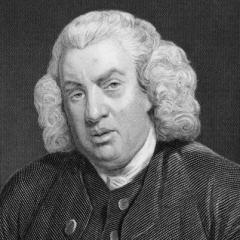
Samuel Johnson
Samuel Johnson was an English writer, poet, and lexicographer, renowned for his comprehensive English dictionary, 'A Dictionary of the English Language', published in 1755. His distinctive writing style and wit have cemented his place as a significant figure in the history of English literature. more
You May Also Like
“If there was ever a just war since the world began, it is this in which America is now engaged.”
“My call is the call of battle- I nourish active rebellion;/ He going with me must go well armed.”
Source: Walt Whitman: Selected Poems 1855-1892
Source: George Bernard Shaw: Collected Articles, Lectures, Essays and Letters: Thoughts and Studies from the Renowned Dramaturge and Author of Mrs. Warren’s Profession, Pygmalion, Arms and The Man, Saint Joan, Caesar and Cleopatra, Androcles And The Lion
“No government power can be abused long. Mankind will not bear it.”
Source: The life of Samuel Johnson, LL. D., comprehending an account of his studies, and numerous works, in chronological order: a series of his epistolary correspondence and conversations with many eminent persons; and various original pieces of his composition, never before published; the whole exhibiting a view of literature and literary men in Great Britain, for near half a century during which he flourished
Source: The Tenure of Kings and Magistrates: Proving, that it is Lawfull, and Hath Been Held So Through All Ages, for Any, who Have the Power, to Call to Account a Tyrant, Or Wicked King, and After Due Conviction, to Depose, and Put Him to Death; If the Ordinary Magistrate Have Neglected, Or Deny'd to Doe It. And that They, who of Late So Much Blame Deposing, are the Men that Did it Themselves. Published Now the Second Time with Some Additions, and Many Testimonies Also Added Out of the Best & Learnedest Among Protestant Divines Asserting the Position of this Book
Source: The Price of Freedom: Speeches and Addresses
Source: Forty Years After: Reconstructing the Social Order