Quotessence
Home / Quotes / Quote by Thomas Carlyle

Quote by Thomas Carlyle

Author

Thomas Carlyle
Thomas Carlyle

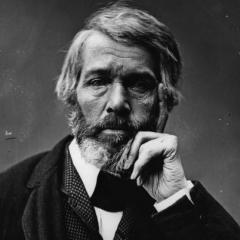
Thomas Carlyle, born on December 4, 1795, and died on February 5, 1881, was a prominent Scottish philosopher, historian, and writer. His works are known for their profound social criticism and unique literary style, which had a significant impact on 19th-century British literature and thought. more

You May Also Like

“If a given scientist had not made a given discovery, someone else would have done so a little later. Johann Mendel dies unknown after having discovered the laws of heredity: thirty-five years later, three men rediscover them. But the book that is not written will never be written. The premature death of a great scientist delays humanity; that of a great writer deprives it.”

“James Watt patented his steam engine on the eve of the American Revolution, consummating a relationship between coal and the new Promethean spirit of the age, and humanity made its first tentative steps into an industrial way of life that would, over the next two centuries, forever change the world.”

“Malthus argued a century and a half ago that man, by using up all his available resources, would forever press on the limits of subsistence, thus condemning humanity to an indefinite future of misery and poverty. We can now begin to hope and, I believe, know that Malthus was expressing not a law of nature, but merely the limitation then of scientific and social wisdom. The truth or falsity of his prediction will depend now, with the tools we have, on our own actions, now and in the years to come.”

“Organs, faculties, powers, capacities, or whatever else we call them; grow by use and diminish from disuse, it is inferred that they will continue to do so. And if this inference is unquestionable, then is the one above deduced from it-that humanity must in the end become completely adapted to its conditions-unquestionable also. Progress, therefore, is not an accident, but a necessity.”

“The object of geometry in all its measuring and computing, is to ascertain with exactness the plan of the great Geometer, to penetrate the veil of material forms, and disclose the thoughts which lie beneath them? When our researches are successful, and when a generous and heaven-eyed inspiration has elevated us above humanity, and raised us triumphantly into the very presence, as it were, of the divine intellect, how instantly and entirely are human pride and vanity repressed, and, by a single glance at the glories of the infinite mind, are we humbled to the dust.”

“The recurrence of a phenomenon like Edison is not very likely. The profound change of conditions and the ever increasing necessity of theoretical training would seem to make it impossible. He will occupy a unique and exalted position in the history of his native land, which might well be proud of his great genius and undying achievements in the interest of humanity.”

“We are a caring nation, and our values should also guide us on how we harness the gifts of science. New medical breakthroughs bring the hope of cures for terrible diseases and treatments that can improve the lives of millions. Our challenge is to make sure that science serves the cause of humanity instead of the other way around.”