Quotessence
Home / Quotes / Quote by Rudolf Leuckart

Quote by Rudolf Leuckart

Work

The Parasites of Man, and the Diseases which Proceed from Them: A Textbook for Students and Practitioners

This book serves as a foundational resource for students and professionals in the field of parasitology, exploring various parasites and the diseases they can induce in humans. more

Author
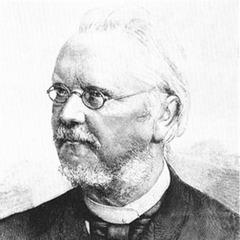
Rudolf Leuckart
Rudolf Leuckart

Rudolf Leuckart was an individual active in the 19th century, with an unknown profession. His life and achievements are not well-documented, and specific information about him is limited. more

You May Also Like

“Perfect concordance among reformers is not to be expected; and men who are honestly struggling towards the light cannot hope to attain at one bound to the complete truth. There is always a danger lest the fascination of a new discovery should lead us too far. Men of science, being human, are apt, like lovers, to exaggerate the perfections and be a little blind to the faults of the object of their choice.”

“Philosophy would long ago have reached a high level if our predecessors and fathers had put this into practice; and we would not waste time on the primary difficulties, which appear now as severe as in the first centuries which noticed them. We would have the experience of assured phenomena, which would serve as principles for a solid reasoning; truth would not be so deeply sunken; nature would have taken off most of her envelopes; one would see the marvels she contains in all her individuals.”

“The traditional disputes of philosophers are, for the most part, as unwarranted as they are unfruitful. The surest way to end them is to establish beyond question what should be the purpose and method of a philosophical enquiry. And this is by no means so difficult a task as the history of philosophy would lead one to suppose. For if there are any questions which science leaves it to philosophy to answer, a straightforward process of elimination must lead to their discovery.”

“The wonderful structure of the animal system will probably never permit us to look upon it as a merely physical apparatus, yet the demands of science require that the evidently magnified principles of vitality should be reduced to their natural spheres, or if truth requires, wholly subverted in favor of those more cognizable by the human understanding. The spirit of the age will not tolerate in the devotee of science a quiet indifference.”