“It will be said that the joy of mental adventure must be rare, that there are few who can appreciate it, and that ordinary education can take no account of so aristocratic a good. I do not believe this. The joy of mental adventure is far commoner in the young than in grown men and women. ...It is rare in later life because everything is done to kill it during education.”
Quote by Bertrand Russell
Work
Why Men Fight: A Method of Abolishing the International Duel
This book delves into the root causes of international conflict, examining the psychological and social dynamics that contribute to the perpetuation of war. It proposes a method for achieving peace and ending the cycle of international dueling, providing a thought-provoking analysis of the complexities involved in global relations. more
Author
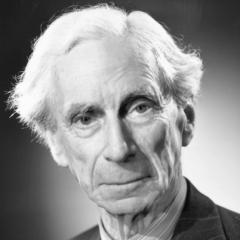
Bertrand Russell
Bertrand Russell was a British philosopher, mathematician, and logician born on May 18, 1872, and died on February 2, 1970. He is known for his contributions to logic and mathematics, particularly in the fields of mathematical logic and philosophical analysis. His works spanned a wide range of subjects, including ethics, political philosophy, history, and literary criticism. more
You May Also Like
Source: Unpopular Essays
Source: Bertrand Russell's Best
“An individual human existence should be like a river”
Source: The life of Bertrand Russell in pictures and in his own words
Source: Religion and Science
Source: The Basic Writings of Bertrand Russell
“A man's opinion is in others; his being is in himself.”
Source: The Works of Joseph Hall: Devotional works
Source: The Works: Now First Collected : with Some Account of His Life and Sufferings. Devotional works