Quotessence
Home / Quotes / Quote by John Fowles

Quote by John Fowles

Work

The Aristos

The Aristos is a thought-provoking novel that delves into the nature of aristocracy, examining its role and impact on societal structures and individual lives. The story explores complex themes of power, privilege, and the pursuit of excellence, offering readers a critical examination of the aristocratic ideal. more
Author

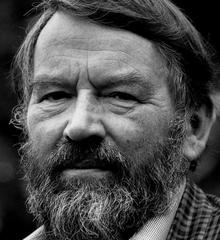
John Fowles
John Fowles

John Fowles was an English novelist known for his unique narrative techniques and profound psychological insights. His works often explore themes of human nature, morality, and existentialism, with 'The French Lieutenant's Woman' and 'The Magus' being his most famous works. more

You May Also Like

“We find all the no-life-support-wealth-producing people going to their 1980s jobs in their cars and buses, spending trillions of dollars' worth of petroleum daily to get to their no-wealth-producing jobs. It doesn't take a computer to tell you that it will save both Universe and humanity trillions of dollars a day to pay them handsomely to stay at home.”

“The officers do not beat the men; the officers and men receive equal treatment. Soldiers are free to hold meetings and speak out. Trivial formalities have been done away with and the accounts are open for all to inspect.”

“The most effective method of propaganda directed at the enemy forces is to release captured soldiers and give the wounded medical treatment... Whenever soldiers of enemy forces are captured, we immediately conduct propaganda among them...This immediately knocks the bottom out of the enemy's slander that the Communist bandits kill everyone on sight.”

“It is impossible not to recognise the Long March as one of the great triumphs of men against odds and men against nature. While the Red Army was unquestionably in forced retreat, its toughened veterans reached their planned objective with moral and political will as strong as ever... Their conviction had helped turn what might have been a terrible defeat into an arrival in triumph.”

“Human memory awakens and extinguishes at will. It dulls and sharpens actions, enlarges and shrinks those who perform them. It humbles and exalts as it desires. When summoned, it slips away, and when it returns, it will do so at the time and place that suits it. It recognizes no chief, no overseer, no classifier, no ruler. Stories mix and mingle, facts sprout new shoots. The situations and words and scents-oh, the scents!-encrusted there are stored in the most disorganized and wonderful manner, not chronologically, not according to size or importance or even the alphabet.”