“Our common stock of words embodies all the distinctions men have found worth drawing, and the connexions they have found worth marketing, in the lifetimes of many generation; these surely are likely to be more numerous, more sound, since they have stood up to the long test of thee survival of the fittest, and more subtle, at least in all ordinary and reasonably practical matters, than any that you or I are likely to think up in our arm-chairs of an afternoon-the most favoured alternative method.”
Quote by J. L. Austin
Author
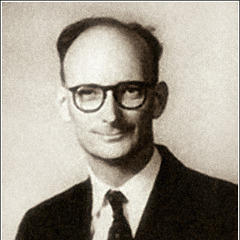
J. L. Austin
J. L. Austin (John Langshaw Austin, March 26, 1911 – February 8, 1960) was a prominent British philosopher and a leading figure in ordinary language philosophy. He studied and taught at Oxford University, where he developed his influential theory of speech acts, arguing that language is not merely descriptive but also performative. His seminal work, How to Do Things with Words, introduced the concepts of locutionary, illocutionary, and perlocutionary acts, and distinguished between performative and constative utterances. Austin's meticulous analysis of everyday language challenged traditional philosophical approaches and had a lasting impact on linguistics, philosophy of language, law, and literary theory. He died of lung cancer at age 48. more
You May Also Like
“Those who write as they speak, even though they speak well, write badly.”
“Give me the right word and the right accent and I will move the world.”
Source: Joseph Conrad’s Sea Tales - Premium Collection: An Outcast of the Islands, The Nigger of the ‘Narcissus’, A Smile of Fortune, Typhoon and more: Classics of World Literature from One of the Greatest English Novelists (Including Author’s Memoirs, Letters & Critical Essays)
Source: The TNIV and the Gender-neutral Bible Controversy
“Most wonderful of all are words, and how they make friends one with another.”
Source: Whirligigs
Source: Leviathan
Source: The Odes & Satyrs of Horace, that Have Been Done Into English by the Most Eminent Hands...: With His Art of Poetry...To this Ed. is Added Several Odes Never Before Published