Quotessence
Home / Quotes / Quote by Marina Warner

Quote by Marina Warner

“The model of the educational Kalila Wa-Dimna. These are books of instruction to rulers and humans. The stories unfold a range of human psychology, a vast range of human psychology. The Sultan is being moved from his narrow and bigoted position into a wider, more subtle, more nuanced understanding of human experiences.”

Quote by Marina Warner

Author
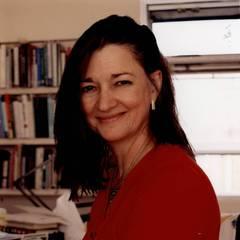
Marina Warner
Marina Warner

Marina Warner is a renowned British novelist known for her unique literary style and in-depth research into mythology and folklore. Her works often blend history, culture, and personal narrative, exploring themes of gender, identity, and memory. more

You May Also Like

“There is humanist enterprise of the book, and amongst that there are many, many stories. And that is why at the end, when he says that the stories are so illuminating that they must be engraved and encased in gold and put in the palace library, the people who compile the book are telling us that this is a collection of human wisdom.”

“An interesting example is that the worst woman in the book, who is so cruel and violent, is the sorceress in "The Prince of the Black Islands." She's a beautiful young woman, and she has turned her husband into stone from the waist down. A traveling sultan finds him, in his dreadful state, and the man petrified from the waist down tells his sad story...how his wife comes every afternoon and beats him until the blood runs down. She's just unwontedly, arbitrarily cruel.”

“The other thing about the Nights is that it is quite racist. One parentheses is that I think this is one of the negative things that appeal to people, that The Arabian Nights could be used as a disguise for racism. It suited the West. You could smuggle racism into children's literature, you see. The African magician in the story of Aladdin, he's labeled explicitly as the "African Magician." He's not a character but a stereotype, and a lot of this got into nursery literature in this Oriental disguise.”

“I don't think that there's a target audience at all. These stories were in circulation. The stories were told by men, told in the marketplace by men, but also behind doors by women, but there's no real record of this. It's likely they were told by women to children in their interior rooms. The story could be a negative story, they could be presented as a, "Watch out! Women will get round you, do things to you, weave you in their toils." It could be buried in it an old cautionary story about women and their wiles.”

“I am not a great believer in dialectical struggle. I am much more of a fusion person. I see it as a dialogue, or trialogue, or polylogue: many, many, many voices, going back a long way. The cultural picture is much more mutually enriching at many different levels, manufacturers...absolutely, design and calligraphy. It's an amazing amount of cross-interests between people.”

“There's a whole slew of wonderful speculation of flying in a fanciful way. Gulliver is one of the central examples; Swift has the hum of Arabian Nights in his ear with Gulliver's Travels. The difference is in scale - Gulliver as a kind of Sinbad kind of figure, the way he is picked up and carried. Just to finish up with Scheherazade, I do think that The Arabian Nights could be considered as a great book on women's position in the world.”