Quotessence
Home / Quotes / Quote by Charles Dickens

Quote by Charles Dickens

Author

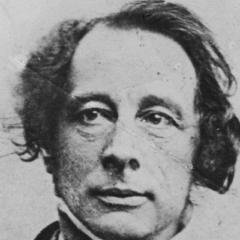
Charles Dickens
Charles Dickens

Charles Dickens, a British writer born on February 7, 1812, and died on June 9, 1870, is one of the greatest novelists of the 19th century. Known for his profound social criticism and vivid narrative style, Dickens' works extensively cover social reality, revealing various issues in the British society of the time. more

You May Also Like

“If we possessed a thorough knowledge of all the parts of the seed of any animal (e.g. man), we could from that alone, be reasons entirely mathematical and certain, deduce the whole conformation and figure of each of its members, and, conversely if we knew several peculiarities of this conformation, we would from those deduce the nature of its seed.”

“Of all the animals, the boy is the most unmanageable, inasmuch as he has the fountain of reason in him not yet regulated.”

“Everything in this world has a hidden meaning, I thought. Men, animals, trees, stars, they are all hieroglyphics; woe to anyone who begins to decipher them and guess what they mean.... When you see them, you do not understand them. You think they are really men, animals, trees, stars. It is only years later, too late, that you understand.”

“After they had accustomed themselves at Rome to the spectacles of the slaughter of animals, they proceeded to those of the slaughter of men, to the gladiators.”

“Of all the unexpected qualities of an unexpected universe, the sheer organizing power of animal and plant metabolism is one of the most remarkable. . . . Where it reaches its highest development, in the human mind, we forget it completely. . . . So important does nature regard this unseen combustion . . . that a starving man's brain will be protected to the last while his body is steadily consumed.”

“We have never understood why men mount the heads of animals and hang them up to look down on their conquerers. Possibly it feels good to these men to feel superior to animals, but does it not seem that if they were sure of it they would not have to prove it? Often a man who is afraid must constantly demonstrate his courage and, in the case of the hunter, must keep a tangible record of his courage.”