Quotessence
Home / Quotes / Quote by Ludwig Feuerbach

Quote by Ludwig Feuerbach

“Faith is essentially intolerant ... essentially because necessarily bound up with faith is the illusion that one's cause is also God's cause.”

Quote by Ludwig Feuerbach

Author
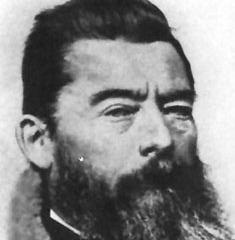
Ludwig Feuerbach
Ludwig Feuerbach

Ludwig Feuerbach, a prominent German philosopher born on July 28, 1804, and died on September 13, 1872. He was a significant figure in the German classical philosophy and had a profound impact on the birth of Marxist philosophy. more

You May Also Like

“In those days, in Far Rockaway, there was a youth center for Jewish kids at the temple.... Somebody nominated me for president of the youth center. The elders began getting nervous, because I was an avowed atheist by that time.... I thought nature itself was so interesting that I didn't want it distorted like that. And so I gradually came to disbelieve the whole religion.”

“No! Not for a second! I immediately began to think how this could have happened. And I realized that the clock was old and was always breaking. That the clock probably stopped some time before and the nurse coming in to the room to record the time of death would have looked at the clock and jotted down the time from that. I never made any supernatural connection, not even for a second. I just wanted to figure out how it happened.”

“If it is to be established that there is a God, then we have to have good grounds for believing that this is indeed so. Until and unless some such grounds are produced we have literally no reason at all for believing; and in that situation the only reasonable posture must be that of either the negative atheist or the agnostic. So the onus of proof has to rest on the proposition of theism.”

“Pascal makes no attempt in this most famous argument to show that his Roman Catholicism is true or probably true. The reasons which he suggests for making the recommended bet on his particular faith are reasons in the sense of motives rather than reasons in the sense of grounds. Conceding, if only for the sake of the present argument, that we can have no knowledge here, Pascal tries to justify as prudent a policy of systematic self-persuasion, rather than to provide grounds for thinking that the beliefs recommended are actually true.”