Quotessence
Home / Quotes / Quote by Antony Flew

Quote by Antony Flew

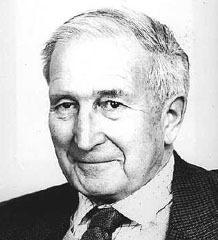
“If it is to be established that there is a God, then we have to have good grounds for believing that this is indeed so. Until and unless some such grounds are produced we have literally no reason at all for believing; and in that situation the only reasonable posture must be that of either the negative atheist or the agnostic. So the onus of proof has to rest on the proposition of theism.”

Quote by Antony Flew

Work

Philosophical Essays

This book compiles a series of essays that delve into the depths of philosophical thought, covering a wide range of topics and ideas within the field of philosophy. more

Author

Antony Flew
Antony Flew

Antony Flew was a British philosopher renowned for his work in the philosophy of religion and ethics. He was a leading figure in the analytic philosophy movement and is particularly remembered for his initial belief in the existence of God, which he later renounced. Flew's career spanned several decades, during which he taught at various universities and authored numerous books and articles on philosophy. more

You May Also Like

“Pascal makes no attempt in this most famous argument to show that his Roman Catholicism is true or probably true. The reasons which he suggests for making the recommended bet on his particular faith are reasons in the sense of motives rather than reasons in the sense of grounds. Conceding, if only for the sake of the present argument, that we can have no knowledge here, Pascal tries to justify as prudent a policy of systematic self-persuasion, rather than to provide grounds for thinking that the beliefs recommended are actually true.”

“In the ordinary, everyday understandings of the words involved, to say that someone survived death is to contradict yourself; while to assert that all of us live forever is to assert a manifest falsehood, the flat contrary of a universally known truth: namely, the truth that all human beings are mortal. For when, after some disaster, the 'dead' and the 'survivors' have both been listed, what logical space remains for a third category?”

“However far back we may be able to trace the - so to speak - internal history of the Universe, there can be no question of arguing that this or that external origin is either probable or improbable. We do not have, and we necessarily could not have, experience of other Universes to tell us that Universes, or Universes with these particular features, are the work of Gods, or of Gods of this or that particular sort.”

“Someone tells us that God loves us as a father loves his children. We are reassured. But then something awful happens. Some qualification is made.... We are reassured again. But then perhaps we ask: what is this assurance of God's (appropriately qualified) love worth, what is this apparent guarantee really a guarantee against? Just what would have to happen not merely (morally and wrongly) to tempt but also (logically and rightly) to entitle us to say "God does not love us" or even "God does not exist"?”

“Atheists are often charged with blasphemy, but it is a crime they cannot commit... When the Atheist examines, denounces, or satirises the gods, he is not dealing with persons but with ideas. He is incapable of insulting God, for he does not admit the existence of any such being... We attack not a person but a belief, not a binge but an idea, not a fact but a fancy.”

“The fact that all our ape cousins - chimpanzees, gorillas and orangutans - can acquire signs - is powerful evidence that our hominid ancestors' first language was gestural and that the vocal version of language was a relatively recent development. My own guess is that vocal language began emerging about 200,000 years ago.”

“With regard to the alternatives, we already have them. The cellular and genetic lines of research in humans are the most promising. AIDS is caused by a virus, so it makes sense to study the virus, not chimpanzees. We have learned virtually nothing about AIDS from the chimpanzee. Every major advance in AIDS research ... has come from human studies.”