Quotessence
Home / Quotes / Quote by Jacques Ellul

Quote by Jacques Ellul

“According to the International Institute for Environment and Development, the annual amount spent globally on advertising aimed at increasing consumption topped $430 billion in 1998.Consumer capitalism is dedicated to the proposition that production is good in itself, no matter what is produced. The net effect is the massive production of absurd, empty and useless items which are nevertheless utterly serious since we earn our living from them, and dedicate our leisure time to them.”

Quote by Jacques Ellul

Author
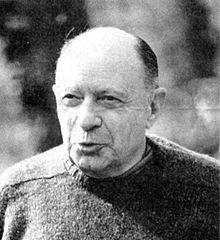
Jacques Ellul
Jacques Ellul

Jacques Ellul (January 6, 1912 - May 19, 1994) was a prominent French philosopher known for his work in the fields of technological philosophy, sociology, and Christian theology. His research focused on the profound reflections on the impact of technology and society on modern life. more

You May Also Like

“The reward of commercial civilization is the ability to consume a never-ending array of products.There are limits beyond which commodities cannot be multiplied without preventing their consumers from affirming themselves through the exercise of their personal freedom.When market dependence reaches a certain threshold it deprives people of their power to live creatively and to act autonomously. And precisely because this new impotence is so deeply experienced, it is expressed with difficulty.”

“Currency speculation-over a trillion dollars a day-is a tax-free activity. The notion of a tax on "day trades" or other speculative swaps was revived in recent years, but has been studiously ignored by all our purveyors of conventional economic wisdom. That is because we have been persuaded, against logic, and moral sense, that the institution that most needs our support these days is not society, nor the human community, but the global corporation.”

“Very few of the heroes of the Golden Age of American finance had much interest in the solid realities of what underlay their structure of stocks and bonds and credits. Later on, a Henry Ford might introduce an era of intensely production-minded captains of industry, but the Harrimans, Morgans, Fricks, and Rockefellers were far more interested in the exciting manipulation of huge masses of intangible wealth than in the humdrum business of turning out goods.”