Quotessence
Home / Quotes / Quote by Laurie Halse Anderson

Quote by Laurie Halse Anderson

Work

The Impossible Knife of Memory

This book delves into the complexities of memory and its impact on individuals, particularly in the context of trauma and personal history. more

Author
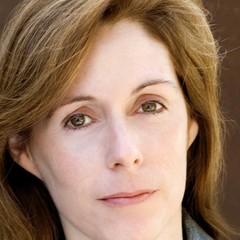
Laurie Halse Anderson

Laurie Halse Anderson is an American author known for her young adult literature. Her works often explore the challenges and growth of adolescence, and are highly appreciated by young readers. more

You May Also Like

“Pitiful and pitied by no one, why have I come to the ignominy of this detestable old age, who was ruler of two kingdoms, mother of two kings? My guts are torn from me, my family is carried off and removed from me. The young king [crown prince Henry, †1183] and the count of Britanny [prince Geoffrey, †1186] sleep in dust, and their most unhappy mother is compelled to be irremediably tormented by the memory of the dead. Two sons remain to my solace, who today survive to punish me, miserable and condemned. King Richard [the Lionheart] is held in chains [in captivity with Emperor Henry VI of Germany]. His brother, John, depletes his kingdom with iron [the sword] and lays it waste with fire. In all things the Lord has turned cruel to me and attacked me with the harshness of his hand. Truly his wrath battles against me: my sons fight amongst themselves, if it is a fight where where one is restrained in chains, the other, adding sorrow to sorrow, undertakes to usurp the kingdom of the exile by cruel tyranny. Good Jesus, who will grant that you protect me in hell and hide me until your fury passes, until the arrows which are in me cease, by which my whole spirit is sucked out?" [Third letter to Pope Celestine (1193)]”

“What do they think has happened, the old fools, To make them like this ? Do they somehow suppose It's more grown-up when your mouth hangs open and drools And you keep on pissing yourself, and can't remember Who called this morning ? Or that, if they only chose, They could alter things back to when they danced all night, Or went to their wedding, or sloped arms some September ? Or do they fancy there's really been no change, And they've always behaved as if they were crippled or tight, Or sat through days of thin continuous dreaming Watching light move ? If they don't (and they can't), it's strange: Why aren't they screaming ? At death, you break up: the bits that were you Start speeding away from each other for ever With no one to see. It's only oblivion, true: We had it before, but then it was going to end, And was all the time merging with a unique endeavour To bring to bloom the million-petalled flower Of being here. Next time you can't pretend There'll be anything else. And these are the first signs: Not knowing how, not hearing who, the power Of choosing gone. Their looks show that they're for it: Ash hair, toad hands, prune face dried into lines- How can they ignore it ? Perhaps being old is having lighted rooms Inside your head, and people in them, acting. People you know, yet can't quite name; each looms Like a deep loss restored, from known doors turning, Setting down a Iamp, smiling from a stair, extracting A known book from the shelves; or sometimes only The rooms themselves, chairs and a fire burning, The blown bush at the window, or the sun' s Faint friendliness on the wall some lonely Rain-ceased midsummer evening. That is where they live: Not here and now, but where all happened once. This is why they give An air of baffled absence, trying to be there Yet being here. For the rooms grow farther, leaving Incompetent cold, the constant wear and tear Of taken breath, and them crouching below Extinction' s alp, the old fools, never perceiving How near it is. This must be what keeps them quiet. The peak that stays in view wherever we go For them is rising ground. Can they never tell What is dragging them back, and how it will end ? Not at night? Not when the strangers come ? Never, throughout The whole hideous inverted childhood? Well, We shall find out.”

“There have been many plagues in the world as there have been wars, yet plagues and wars always find people equally unprepared. [...] When a war breaks out people say: 'It won't last, it's too stupid.' And war is certainly too stupid, but that doesn't prevent it from lasting. Stupidity always carries doggedly on, as people wold notice if they were not always thinking about themselves. In this respect, the citizens of Oran were like the rest of the world, they thought about themselves, in other words, they were humanists: they did not believe in pestilence. A pestilence does not have human dimensions, so people tell themselves that it is unreal, that it is a bad dream which will end. But it does not always end and, from one bad dream to the next, it is people who end, humanists first of all because they have not prepared themselves.”