Quotessence
Home / Quotes / Quote by Don DeLillo

Quote by Don DeLillo

“Marriage is something we make from available materials. In this sense it's improvised, it's almost offhand. Maybe this is why we know so little about it. It's too inspired and quicksilver a thing to be clearly understood. Two people make a blur.”

Quote by Don DeLillo

Work

The Names

This book delves into the profound influence that names have on shaping identity, relationships, and cultural perceptions. Through intricate narratives and thought-provoking themes, it examines the power of names in defining personal and collective identities. more

Author

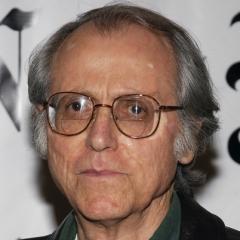
Don DeLillo
Don DeLillo

Don DeLillo is an American writer born on November 20, 1936. Known for his unique literary style and profound insights into modern society, his works often explore the impacts of technology, consumerism, and globalization. more

You May Also Like

“We should look on man with wonder, conscious that his intellect, being infinite, is the image of the invisible God; and that even if it is for a time limited by the body, as St Basil says, it can embrace all form, just as God's providence embraces the whole universe. For the intellect has the ability to transform itself into everything, and is dyed with the form of the object it apprehends. But when it is taken up into God, who is formless and imageless, it becomes formless and imageless itself. Then we should marvel at how the intellect can preserve any thought or idea, and how an earlier thought need not be modified by later thoughts, or a later thought injured by earlier ones. On the contrary, the mind like a treasure-house tirelessly stores all thoughts. And these thoughts, whether new or long held in store, the intellect when it wishes can express in language; yet although words are always coming from it, it is never exhausted.”

“In the wake of scientific rationality, mind turns into a wave of noetic deracination. This deracination of thought and its noetic drift is commensurate with what Plato calls the Form of Good as the Form of Forms, since it sets up the scaffolding for a conception of the realm of intelligibilities as a complex system of recipes for crafting a world which includes not only satisfying lives but also the perpetual demand for the better.”

“My uncle says the architects got rid of the front porches because they didn't look well. But my uncle says that was merely rationalizing it; the real reason, hidden underneath, might be they didn't want people sitting like that, doing nothing, rocking, talking; that was the wrong kind of social life. People talked too much. And they had time to think. So they ran off with the porches. And the gardens, too. Not many gardens any more to sit around in. And look at the furniture. No rocking?chairs any more. They're too comfortable. Get people up and running around. My uncle says . . . and . . . my uncle . . . and . . . my uncle . . .”

“By then I’d already learned that thoughts sometimes come to us in words, and sometimes in images. There were some thoughts - such as a memory of running under the pouring rain, and how it felt - that I couldn’t even begin to put into words … Yet their image was clear in my mind. And there were other things that I could describe in words but were otherwise impossible to visualize: black light, my mother’s death, infinity.”