Quotessence
Home / Quotes / Quote by George MacDonald

Quote by George MacDonald

“There are some who, if you propose to examine into anything, immediately set you down as an unbeliever in that thing. A man who wants to find out what the Bible really means, is, by those who do not believe in it a tenth part as much as he, set down as an unbeliever in the Bible; whereas it is a proof of the very strongest probability to the contrary.”

Quote by George MacDonald

Work

Donal Grant

Donal Grant is a fictional character at the center of a narrative that explores themes and events relevant to the genre in which the book is categorized. more

Author

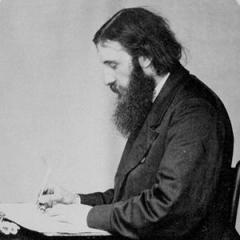
George MacDonald
George MacDonald

George MacDonald was a 19th-century Scottish author known for his fantasy literature and religious thought. His works had a profound influence on later writers, such as J.R.R. Tolkien and C.S. Lewis. more

You May Also Like

“Science alone cannot provide the impetus for changing human conduct. It does not provide a compelling warrant for acknowledging the intrinsic value of life or its sanctity.... If, however, we take our cue from Genesis, damaging creation is tantamount to defacing God's sanctuary, an act of utter sacrilege.”

“Read ecologically, the psalm [Ps 104] claims God's biophilia as a model for humanity's role and presence in the world. Delighting in creation has nothing to do with exploiting the world for the common greed. Rather, it has all to do with receiving the world's abundance for the common good, a sufficiency to be shared, not hoarded.”

“No subordination pertains in the garden. The adam's service to the garden is rooted in his kinship with the ground. Marriage, according to the Yahwist, is founded on the kindship intimacy of partnership and companionship (2:24). Life in the garden is one of fruitful work, abundance, and intimate companionship. In the garden there is neither fear nor shame, even before God. These are 'lacks' that are meant to endure. But, alas, they do not.”

“As God in Genesis 1 is no imperious warrior, so human beings are not conquerors of creation. The language of dominion lacks all sense of exploitation (1:26, 28). The hoarding of resources is implicitly forbidden in the account: seed-bearing plants and fruit trees are granted to animals and humans alike (1:30). Absent is any hint of the savage competition for resources. God's gift of sustenance is one of abundance, not scarcity, to be shared, not hoarded.”

“So instead we continue our backward journey through time into the high Middle Ages of the thirteenth century. At one time thought of as an intellectual backwater of history, when the darkness of mysticism, magic and astrology spent centuries stifling the emergence of true scientific enquiry, it is now increasingly seen as the nursey of Renaissance thought, a bridge from the creative thinking of the ancients to science in its modern form.”

“A tiny 'bubble' of the new created world order nucleates at the first Easter. But it does not sweep all nature before it in passivity. Instead there is an implicit invitation to participate in the coming into being of renewed creation. The gospel message contains the same beckoning finger that was extended to Job on his ash heap, extending an invitation to explore the possibilities of a new nature.”