Quotessence
Home / Quotes / Quote by Joseph Campbell

Quote by Joseph Campbell

“We're so engaged in doing things to achieve purposes of outer value that we forget the inner value, the rapture that is associated with being alive, is what it is all about.”

Quote by Joseph Campbell

Work

The Power of Myth

This book delves into the profound influence of myths on human thought, behavior, and cultural development, offering insights into the universal themes and archetypes found in myths across different cultures and eras. more
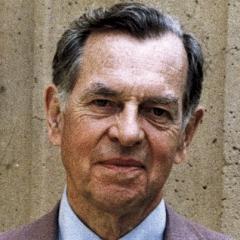
Author

Joseph Campbell
Joseph Campbell

Joseph Campbell was an American writer, scholar, and mythologist, renowned for his studies of world mythology. His work, 'The Hero with a Thousand Faces', has had a profound impact on modern culture, widely used in literature, film, and psychology fields. more

You May Also Like

“The capitalist world-economy needs the states, needs the interstate system, and needs the periodic appearance of hegemonic powers. But the priority of capitalists is never the maintenance, much less the glorification, of any of these structures. The priority remains always the endless accumulation of capital, and this is best achieved by an ever-shifting set of political and cultural dominances within which capitalist firms maneuver, obtaining their support from the states but seeking to escape their dominance.”

“The high point of the struggle against domination was the historic movement of liberation, be it political, sexual or otherwise - a continuous movement, with guiding ideas and visible actors. But liberation also occurred with exchanges and markets, which brings us to this terrifying paradox: all of the liberation fights against domination only paved the way for hegemony, the reign of general exchange -against which there is no possible revolution, since everything is already liberated.”

“It still shocks me to see countless academics who consider themselves intelligent, deep, or critical who constantly post and share articles from places like NYTimes, the New Yorker, the Atlantic, and other such sources that, at the surface, appear to be intelligent, objective, and critical even of the power under which they operate (the Western elites), but if you dig deeper, you will discover that they are, one way or another, in perfect harmony with the imperial and colonial agenda of the West against the rest.”

“[…] a student in our class asked disdainfully why quantitative methodologists do not openly criticize qualitative methods. He scoffed, 'They don't even mention it. But in courses in qualitative methods, quantitative methods always come up.' […] I pointed out that the lack of critical remarks and the absence of any mention of qualitative research in 'methods' courses indicate the hegemony of the quantitative approach. Were not his statistics professors making a strong statement about the place of qualitative methods by omitting them entirely? Qualitative researchers, then, have to legitimate their perspective to students in order to break the methodological silence coming from the other side.”

“Modernite öncesi zamanlarda şiddet her yerde hazır ve nazırdır, gündelik hayatın bir parçasıdır ve alenidir. Toplumsal pratiğin ve iletişimin önemli bir parçasıdır hatta. Onun için yalnız fiilen uygulannakla kalınmaz, seyirlik hâle de getirilir. Hükümdar iktidarını öldürme fiili üzerinden, kan dökmek vasıtasıyla ilan eder. Kamusal alanlarda sahnelenen kanlı seyirlikler, iktidarını ve haşmetini kurgulamak içindir. Şiddet ve şiddetin teatral sahnelenişi burada iktidarın ve hegemonyanın önemli bir parçasıdır.”

“Every extension of hegemony is also an extension of terror. Let's be clear: Beyond spectacular terrorism, terror should be seen as an infiltration, an internal convulsion, a form of power fighting itself. Power itself, from the inside, secretes an antagonistic power that materializes in one way or another-it could be Islam or it could be something else altogether. Every form is possible, but, for the most part, terror is a form of reversion - it is not necessarily violent, although in its most extreme form it necessarily implies death. The death of its victims, but first and foremost the death of the terrorists. September 11 put the spotlight on the symbolic use of death as an absolute weapon. The death of a terrorist is not a suicide: it is an effigy of the virtual death that the system inflicts on itself. From revolt to revolt, it take multiple forms throughout history. From the sabotage and destruction of machines by Luddites in 1820 to Blacks burning their own neighborhoods in America in the 1960s, from general strikes to hostage taking and suicide attacks, we have gone increasingly farther into unilateral sacrifice, in suicidal violence without mercy or possible response - into the unexchangeable.”

“Discussion of psychological warfare remains controversial because reexamination of its record leads in short order to a heretical conclusion: The role of the United States in world affairs during our lifetimes has often been rapacious, destructive, tolerant of genocide, and willing to sacrifice countless people in the pursuit of a chimera of security that has grown ever more remote. Rethinking psychological warfare's role in communication studies, in turn, requires reconsideration of where contemporary Western ideology comes from, whose interests it serves, and the role that social scientists play in its propagation. Such discussions have always upset those who are content with the present order of things. For the rest of us, though, they permit a glimmer of hope.”