“No live organism can continue for long to exist sanely under conditions of absolute reality.”
Quote by Shirley Jackson
Work
The Haunting of Hill House
Shirley Jackson's classic novel delves into the eerie and unexplainable events that take place within the walls of Hill House, a secluded and ominous mansion. The story follows a group of individuals who are invited to stay at the house to study its supposed paranormal activity, leading to a chilling and suspenseful exploration of the human psyche and the supernatural. more
Author
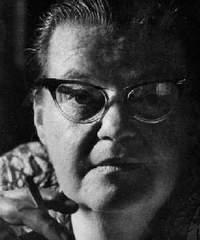
Shirley Jackson
Shirley Jackson (December 14, 1916 – August 8, 1965) was an American author whose dark and unsettling stories have left a lasting impact on the horror genre. Known for her psychological insights and the way she intertwines the supernatural with everyday life, Jackson's work has been widely celebrated for its originality and depth. more
You May Also Like
“You do things and do things and nobody really has a clue.”
Source: Rabbit, run ; Rabbit redux
Source: God, guns, and rock 'n' roll
“You've learned that every good lie is threaded with truth and every accepted truth leaks lies.”
Source: Coronado LP
Source: Figments of Reality: The Evolution of the Curious Mind
Source: The Works of Edmund Spenser: With Observations of His Life and Writings