Quotessence
Home / Quotes / Quote by Wilhelm von Humboldt

Quote by Wilhelm von Humboldt

“Reason cannot desire for man any condition other than that in which not only every individual enjoys the most absolute, unbounded freedom to develop himself out of himself, in true individuality, but in which physical nature, as well, need receive no other shaping by human hands than that which is given to her voluntarily by each individual, according to the measure of his wants and his inclinations, restricted only by the limits of his energy and his rights.”

Quote by Wilhelm von Humboldt

Author
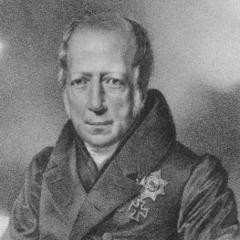
Wilhelm von Humboldt

German philosopher, educator, and linguist, known as the 'Father of Educational Reform'. Wilhelm von Humboldt was born on June 22, 1767, and died on April 8, 1835. He had profound insights into education, language, and culture, which had a lasting impact on the world. more

You May Also Like

“All political arrangements, in that they have to bring a variety of widely-discordant interests into unity and harmony, necessarily occasion manifold collisions. From these collisions spring misproportions between men's desires and their powers; and from these, transgressions. The more active the State is, the greater is the number of these.”

“In every remodelling of the present, the existing condition of things must be supplanted by a new one. Now every variety of circumstances in which men find themselves, every object which surrounds them, communicates a definite form and impress to their internal nature. This form is not such that it can change and adapt itself to any other a man may choose to receive; and the end is foiled, while the power is destroyed, when we attempt to impose upon that which is already stamped in the soul a form which disagrees with it.”

“The key problem is to find out why that sector of society of the past, which I would not hesitate to call capitalist, should have lived as if in a bell jar, cut off from the rest; why was it not able to expand and conquer the whole of society?... [Why was it that] a significant rate of capital formation was possible only in certain sectors and not in the whole market economy of the time?”