Quotessence
Home / Quotes / Quote by George Bernard Shaw

Quote by George Bernard Shaw

“When the world goes mad, one must accept madness as sanity; since sanity is, in the last analysis, nothing but the madness on which the whole world happens to agree.”

Quote by George Bernard Shaw

Author
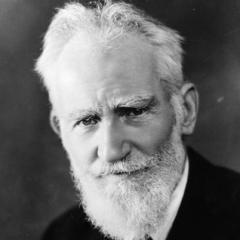
George Bernard Shaw
George Bernard Shaw

George Bernard Shaw (July 26, 1856 - November 2, 1950) was an Irish-British playwright, critic, and socialist. He is renowned for his satirical and witty dramatic works. more

You May Also Like

“Thanksgiving. It's like we didn't even try to come up with a tradition. The tradition is, we overeat. 'Hey, how about at Thanksgiving we just eat a lot?' 'But we do that every day!' 'Oh. What if we eat a lot with people that annoy the hell out of us?'”

“No country upon earth ever had it more in its power to attain these blessings than United America. Wondrously strange, then, and much to be regretted indeed would it be, were we to neglect the means and to depart from the road which Providence has pointed us to so plainly; I cannot believe it will ever come to pass.”

“We are either a United people, or we are not. If the former, let us, in all maters of general concern act as a nation, which have national objects to promote, and a national character to support. If we are not, let us no longer act a farce by pretending to it.”

“Every man who loves peace, every man who loves his country, every man who loves liberty ought to have it ever before his eyes that he may cherish in his heart a due attachment to the Union of America and be able to set a due value on the means of preserving it.”

“Let the American youth never forget, that they possess a noble inheritance, bought by the toils, and sufferings, and blood of their ancestors; and capacity, if wisely improved, and faithfully guarded, of transmitting to their latest posterity all the substantial blessings of life, the peaceful enjoyment of liberty, property, religion, and independence.”

“Is it not the glory of the people of America, that whilst they have paid a decent regard to the opinions of former times and other nations, they have not suffered a blind veneration for antiquity, for custom, or for names, to overrule the suggestions of their own good sense, the knowledge of their own situation, and the lessons of their own experience? To this manly spirit, posterity will be indebted for the possession, and the world for the example of the numerous innovations displayed on the American theatre, in favor of private rights and public happiness.”