Quotessence
Home / Quotes / Quote by Jim Shepard

Quote by Jim Shepard

“I don't think conservativism is about a deficiency. I think it's about a commitment to an ideology that has to in some ways devalue the usefulness of empathy. I do think empathy can be learned. And enhanced.”

Quote by Jim Shepard

Author
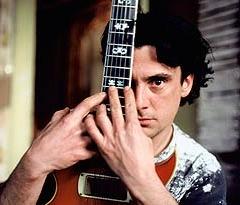
Jim Shepard
Jim Shepard

Jim Shepard is an American author born on December 29, 1956. His works are known for their unique narrative techniques and profound insights into social issues. more

You May Also Like

“Empathy is a human trait. But lots of humans exercise some traits more energetically than others. By "the usefulness of empathy" I mean the way in which a progressive might claim that empathy is a crucial aspect of any benign political system, and the way a conservative might argue that not only is it not necessary, but it might not even be all that helpful, in that regard.”

“I think there's no question that historians create; they would tell you that, I think. If I'm trying to imagine an imperial Roman position, it's much easier to imagine the poor schlub who's not even sure why he's doing what he's doing than it is to imagine Caesar. At least for me. And I'm intrigued, too, by the position of the poor schlub who *still* finds himself supporting the imperial project.”

“I don't beat at the details, but I do always keep in mind that anything that isn't A) moving the story forward or B) enlarging my understanding of the central characters has to be sacrificed. I have huge folders of details - research - with a story like Netherlands. Only a very small part of it gets used. The old iceberg analogy again.”

“We've demonstrated a strong track record of being very disciplined with the use of our cash. We don't let it burn a hole in our pocket, we don't allow it to motivate us to do stupid acquisitions. And so I think that we'd like to continue to keep our powder dry, because we do feel that there are one or more strategic opportunities in the future.”

“I have written screenplays. Most recently for Errol Morris, who was thinking about doing his first fiction movie, and with a young director who wanted to adopt Project X. Errol was a hoot. I loved talking with him. We were a good match, too, because we both kept joking that we'd found the only other person on earth more ambivalent than we were about the project.”

“Education is huge for me. I went to public school until I turned thirteen, and was lucky enough to afford college once I became successful as an actress. I cannot believe that quality education costs as much as it does in this country. Ghetto Film School is a remarkable public high school in New York City where students get to learn to express themselves through filmmaking, and have hands-on access to equipment.”