Quotessence
Home / Quotes / Quote by Mike Patton

Quote by Mike Patton

“The creative process for a musician is very different than for a filmmaker. I have an idea and I can pretty much execute it. As old as I am now and as long as I've been doing it, I can pretty much get it done in a week. While a filmmaker has a great idea that should be out tomorrow, but he has to go through this process of getting financing, then selling it, then casting. I've always been in awe of filmmakers and their patience in realizing their vision because I could never do that.”

Quote by Mike Patton

Author
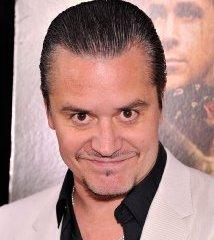
Mike Patton
Mike Patton

Mike Patton, born on January 27, 1968, is a versatile singer-songwriter known for his diverse musical styles, encompassing rock, jazz, electronic, and more. With his unique voice and creative talent, Patton has made a significant mark in the music industry, serving as the lead vocalist for various bands and projects, including Faith No More, Mr. Bungle, and Tomahawk. His music has been widely appreciated by audiences and has had a profound impact on music creation in subsequent generations. more

You May Also Like

“It's frustrating when people get upset with me about not going out to DVD - the reason is that I plan to tour with the films for many, many years, not just a month or a week. Literally years. And as soon as I would put it out on DVD, it would ruin the financial possibilities of me making it a theatrical event. Whereas the book, the publishing of a screenplay, would not cause that problem.”

“My interest in music tends toward being orchestral music. And the repertoire of music that exists is, to me, far more emotive than what is standardly used in movie scores. That isn't always. I think there've been some excellent movie scores by excellent directors. But for the most part, watching a film, one of today's movies, I think that the emotional undertone of movie scores is pretty poor.”

“I can't really speak to what it was like to call yourself a feminist in the past on a personal level but I think calling oneself a feminist in the past may have been inimical because feminists in the '70s were the first to really challenge deeply embedded gender roles and demand concrete political and economic rights. They were asking for rights that seemed like a direct threat to those in power - they were asking for equality in a society that didn't have it in an obvious way. They were put down and villainized because they were seen as threatening.”

“Now, I think a lot of people look around and feel that we're relatively equal with men. In fact, women are now the majority of college graduates, we have role models like Hillary Clinton to look up to - it seems like the world is completely open to us and we can accomplish anything. I think feminists are often disdained today because we're seen as complaining about a problem people think no longer exists. I also think young women shy away from calling themselves feminists because many haven't been educated about it or exposed to it. They don't know enough about it to identify with it.”

“Though women may appear equal in some ways, and though we definitely have accomplished a lot, the fact is one in one women will still experience sexual violence at some point in their lives; a mere 17 percent of the U.S. Senate is female; women still only make 77 cents for every man's dollar - and that's not even taking into consideration global issues like sex trafficking or honor killings. We still need feminism, it's just not as easy for people - especially people in an incredibly privileged country like America - to always see that.”

“It's always been important to me to be very upfront with people about the fact that I do identify as a feminist because it's an opportunity to expose people to and educated them about the movement. Young women don't identify as feminist is because they don't know any feminists and don't have a comprehensive understanding of what it is, I gave them example and an opportunity to ask about it. And once they saw that I wasn't the embodiment of the negative feminist stereotype - that I was a normal teen girl just like them - I think they became more open to learning about what feminism really is.”

“I honestly feel that most young women out there are feminists - they just don't know that the word "feminism" describes the things they believe in. I wants to show young women that while feminists of the past did incredible work and that while the relative equality we experience now is due to their hard work, we still have a ways to go. We still have to fight for our rights and be vigilant in terms of keeping the rights we do have.”

“I have been villainized because of my identity - I've received nasty blog comments and emails just based on my willingness to identify with feminism by people who clearly don't understand what I value and why I identify as a feminist. Ultimately, I'm less concerned with whether or not people identify as feminist and am more concerned with whether or not people understand what feminism is. If they don't want to identify as a feminist that's fine. I respect people's decision to identify any way they want and expect that same respect in return, although I don't always get it.”

“From what I understand from talking with older friends and feminists, I think that once I enter the workforce and start to think about marriage and having children, my gender will probably eclipse my feminist identity in terms of marginalization. Discrimination in terms of hiring and in the workplace are still real according to statistics. I also think, as a feminist, figuring out what a relationship based on true and complete equality is will be a challenge. But hopefully by the time I'm dealing with those issues feminists will have made great progress in all of those areas.”