“Doeg, though without knowing how or why, Made still a blundering kind of melody; Spurr'd boldly on, and dash'd through thick and thin, Through sense and nonsense, never out nor in; Free from all meaning whether good or bad, And in one word, heroically mad.”
Quote by John Dryden
Work
Poetical Works: Containing Original Poems, Tales, and Translations
This book is a compilation of literary pieces that encompass a range of poetic forms, including original compositions, narrative tales, and translations of poems from different cultures and languages. more
Author
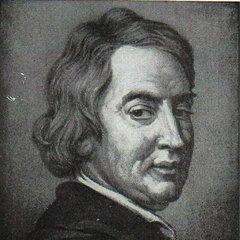
John Dryden
John Dryden, born on August 9, 1631, and died on May 12, 1700, was a prominent English poet and dramatist of the 17th century. His works have had a profound impact on English literature, particularly in the field of drama, and he is considered one of the founders of English drama. more
You May Also Like
Source: Selected essays
Source: The Life and Letters of Faraday
Source: Conversations on the Craft of Poetry
Source: Some speculations on literature, history, and religion
Source: Some speculations on literature, history, and religion
“Poetry is the mother-tongue of the human race.”
Source: Writings on Philosophy and Language