Quotessence
Home / Quotes / Quote by David Salle

Quote by David Salle

“Artists talk about art in sort of straightforward terms, more like the way you talk about plumbing fixtures. Does it function well? Does it bring the hot water up from the cellar efficiently, or does it lose too much thermodynamic energy in the process? Artists are also very ruthless with each other and can be very brutal in evaluating each other's work because their criteria is almost more mechanistic. Does it do what it's supposed to be doing in an efficient way? That doesn't mean that intention is not part of the conversation, but it's not the foreground.”

Quote by David Salle

Author
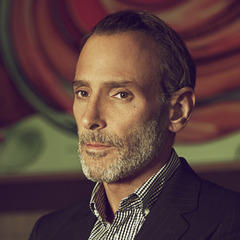
David Salle
David Salle

David Salle is an influential American painter born on September 28, 1952. Known for his unique artistic style and interdisciplinary approach, Salle's work has made a significant impact in the contemporary art world. His paintings often blend various artistic techniques, including collage, photography, and painting, reflecting his profound insights into culture, society, and history. more

You May Also Like

“I was actually dumbfounded by how some artists talked to each other. For example, it was a normal night at a bar, nothing very momentous, when in walked a painter. The other painters at the bar had a bit of an attitude about it. One said to him, "You know, I'm tired of that feeling of hot air coming out from behind your work." And I thought, "Well, that's interesting." I didn't know you could even think something like that, let alone say it right to someone's face.”

“When I first came to New York, I knew some painters older than myself. I was kind of the kid who was allowed to hang out with them. That is more the way people talked in those days, it was perfectly normal to question a work's fundamental premises and its fundamental visual manifestations. It was perfectly okay to say, "Oh, that should have been red" or something like that. In a funny way, the way artists talk about art is to de-privilege it.”

“There was a review by Fairfield Porter from the 1950s about Mark Rothko, one of the more hallowed names in American art. Porter says something like, "Yeah, Rothko paints rectangles of color. They have mass but no weight." That's not in any way a detraction, but it's a description. And it has nothing to do with the spiritual dimension. The main thing is as an intelligent viewer, to identify just what those things are that it does, that those rectangles do, and then not assume that they do these things over here. I don't know why that's challenging.”

“There were successful ways of expressing the attitude and less successful ways. I think that spirit is very much alive today actually. That's what a certain generation of curators is alert to or on the look out for: an attitude. And it is a brilliant and moving spectacle when it happens. That suspension of disbelief is something that we all respond to. But it's hard to capture the butterfly without tearing the wings off of it.”

“There are so many different ways to talk and think about art. We just spoke about when attitude becomes form. But when I was a kid, I had these two art teachers, a couple, who were continuing a line of very classical, atelier art training, and they instilled in me a sensitivity to all the classical verities of line, shape, color, texture, and composition, which is only engaging if you're making two-dimensional objects.”

“I feel like it's not so much a tradition as a system that has been codified over the centuries starting in the Renaissance that applies to any painted surface. So if you're engaging in paintings, this is the language that one has to learn and is obliged to speak. I was very fortunate that I learned this language when I was a kid before I went to California, where I learned the language of attitude. Somehow the two things began to coexist.”