Quotessence
Home / Quotes / Quote by John Green

Quote by John Green

Work

The Fault in Our Stars

This novel delves into the profound relationship between two teenagers, Hazel and Gus, who share a rare cancer diagnosis. Their journey is marked by humor, heartache, and the search for meaning in a world that often seems unfair. more

Author
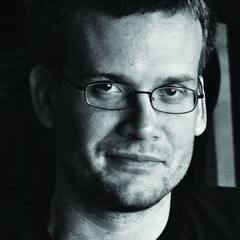
John Green
John Green

John Green is an American author known for his young adult literature. His works often explore themes such as adolescence, love, family, and identity, and have gained popularity among young readers. Green's books have won numerous literary awards and have become bestsellers. more

You May Also Like

“"Stupid English." "English isn't stupid," I say. "Well, my English teacher is." He makes a face. "Mr. Franklin assigned an essay about our favorite subject, and I wanted to write about lunch, but he won't let me." "Why not?" "He says lunch isn't a subject." I glance at him. "It isn't." "Well," Jacob says, "it's not a predicate, either. Shouldn't he know that?"”

“She wanted an Angel of Music . . . an angel who would make her believe in herself at last. I'd been the Angel of Doom for the khanum. There was no reason in the world why I could not be the Angel of Music for Christine. I couldn't hope to be a man to her, I couldn't ever be a real, breathing, living man waking at her side and reaching out for her . . . But I could be her angel' -Erik”

“He shifted his weight, throwing his good leg off the bed as if he were going to try to stand. “What are you doing?” I demanded through the tears. “Lie down, you idiot, you’ll hurt yourself!” I jumped to my feet and pushed his good shoulder down with two hands. He surrendered, leaning back with a gasp of pain, but he grabbed me around my waist and pulled me down on the bed, against his good side. I curled up there, trying to stifle the silly sobs against his hot skin.”

“She was fully, painfully aware that very rarely did midnight strike in two hearts at once, very rarely did midnight arouse two different equal desires, and that any dislocation in this, any indifference, was an indication of disunity, of the difficulties, the impossibilities of fusion between two human beings.”