“Every one knows that the exercise of military power is forever dangerous to civil rights; and we have had recent instances of violences that have been offer'd to private subjects.”
Quote by Samuel Adams
Work
The Writings of Samuel Adams: 1764-1769
This volume presents the written record of Samuel Adams, the Boston-born political activist and future Founding Father, spanning the years 1764 to 1769. The collection includes correspondence with fellow patriots, essays circulated in colonial newspapers, and organizational documents related to early resistance efforts against British parliamentary policies. These writings document Adams's development as a political theorist and his role in mobilizng colonial public opinion against measures such as the Stamp Act and Townshend Acts. The documents reflect Adams's emphasis on civic virtue, natural rights philosophy, and the importance of popular resistance to arbitrary authority. Scholars and historians of American revolutionary history regard this correspondence as essential source material for understanding the ideological foundations of the American independence movement and the political culture of pre-revolutionary Boston. more
Author
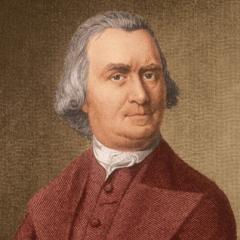
Samuel Adams
Samuel Adams was a prominent figure during the American Revolutionary War and is considered one of the Founding Fathers of the United States. Born on September 27, 1722, and died on October 2, 1803, Adams played a crucial role in the American independence movement. He was a political leader in the Massachusetts colony and one of the drafters of the United States Constitution. more
You May Also Like
Source: The Writings of Samuel Adams: 1778-1802
“Liberty will not long survive the total extinction of morals.”
Source: The Writings of Samuel Adams: 1773-1777: 1773-1777
Source: The planting of colonies in New England
Source: The Writings of Samuel Adams: 1773-1777: 1773-1777