Quotessence
Home / Quotes / Quote by Samuel Adams

Quote by Samuel Adams

Work

The Writings of Samuel Adams: 1773-1777: 1773-1777

The volume includes letters, essays, and speeches by Samuel Adams, highlighting his role in the American Revolution and his contributions to the formation of the United States. more

Author
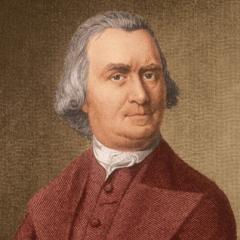
Samuel Adams
Samuel Adams

Samuel Adams was a prominent figure during the American Revolutionary War and is considered one of the Founding Fathers of the United States. Born on September 27, 1722, and died on October 2, 1803, Adams played a crucial role in the American independence movement. He was a political leader in the Massachusetts colony and one of the drafters of the United States Constitution. more

You May Also Like

“And if a minister shall usurp the supreme and absolute govern ment of America, and set up his instructions as laws in the colonies, and their Governors shall be so weak or so wicked, as for the sake of keeping their places, to be made the instruments in putting them in execu tion, who will presume to say that the people have not a right, or that it is not their indispensible duty to God and their Country, by all rational means in their power to RESIST THEM.”

“Is it not High Time for the People of this Country explicitly to declare, whether they will be Freemen or Slaves? It is an important Question which ought to be decided. It concerns us more than any Thing in this Life. The Salvation of our Souls is interested in the Event: For wherever Tyranny is establish'd, Immorality of every Kind comes in like a Torrent. It is in the Interest of Tyrants to reduce the People to Ignorance and Vice.”

“And if we now cast our eyes over the nations of the earth, we shall find that, instead of possessing the pure religion of the Gospel, they may be divided either into infidels, who deny the truth; or politicians who make religion a stalking horse for their ambition; or professors, who walk in the trammels of orthodoxy, and are more attentive to traditions and ordinances of men than to the oracles of truth.”

“Among the natural rights of the colonists are these: first, a right to life; second, to liberty; third, to property; together with the right to support and defend them in the best manner they can. These are evident branches of ... the duty of self-preservation, commonly called the first law of nature. All men have a right to remain in a state of nature as long as they please; and in case of intolerable oppression, civil or religious, to leave the society they belong to, and ernter into another.... Now what liberty can there be where property is taken away without consent?”