Quotessence
Home / Quotes / Quote by Stephen Covey

Quote by Stephen Covey

“The first principle of ethical power is Purpose. By purpose, I don't mean your objective or intention-something toward which you are always striving. Purpose is something bigger. It is the picture you have of yourself-the kind of person you want to be or the kind of life you want to lead.”

Quote by Stephen Covey

Author
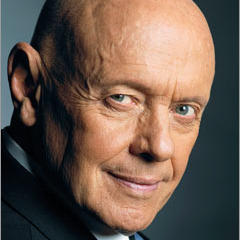
Stephen Covey
Stephen Covey

Stephen Covey was an American author, entrepreneur, and lecturer, best known for his book 'The 7 Habits of Highly Effective People'. Since its publication in 1989, this book has become a global bestseller and has had a profound impact on personal and organizational development. more

You May Also Like

“My own view, which does not rely solely on religious faith or even on an original idea, but rather on ordinary common sense, is that establishing binding ethical principles is possible when we take as our starting point the observation that we all desire happiness and wish to avoid suffering.”

“The Nazi Party was, in the early 1920s, but one among many nationalist and volkisch radical political groups. It was catapulted to prominence with the onset of economic recession in the late 1920s... The Nazis owed their spectacular to a combination of two discrete sets of factors: first, their distinctive organisation and strategy; and secondly, the wider socio-economic conditions which created climates of opinion and sets of grievances on which the Nazis could prey.”

“The repeated claim before the 'seizure of power' - that the NSDAP, as a national social-revolutionary movement, and not simply another political party... would create new bonds of unity through its elimination and transcending of the party system, was highly attractive and conveyed much of Nazism's dynamic appeal.”

“Within the Nazi Party, the beginnings of a personality cult around Hitler go back to the year before the [Munich] putsch... Outside these small groups of fanatical Bavarian Nazis, Hitler's image and reputation at this time - so far as the wider German public took any notice of him at all - was little more than that of a vulgar demagogue, capable of drumming up passionate opposition to the government among the Munich mob, but of little else.”

“Without the changed conditions, the product of a lost war, a revolution and a pervasive sense of national humiliation, Hitler would have remained a nobody. His main ability by far, as he came to realise during the course of 1919, was that in the prevailing circumstances he could inspire an audience which shared his basic political feelings, by the way he spoke, by the force of his rhetoric, by the very power of his prejudice, by the conviction he conveyed that there was a way out of Germany's plight.”

“A state does not simply fall apart as a result of depression... [Weimar Germany] was not destroyed by economic depression or widespread unemployment, though these naturally contributed to the atmosphere of doom, but because the Weimar Right was resolved to abolish the parliamentary state in favour of a vaguely conceived authoritarian state.”