“My own view, which does not rely solely on religious faith or even on an original idea, but rather on ordinary common sense, is that establishing binding ethical principles is possible when we take as our starting point the observation that we all desire happiness and wish to avoid suffering.”
Quote by Dalai Lama
Work
Ancient Wisdom, Modern World: Ethics for the New Millennium
This book examines the relevance of classical ethical teachings—particularly those from Eastern and Western philosophical traditions—in addressing the complex moral dilemmas of the twenty-first century. It discusses concepts such as compassion, responsibility, and interconnectedness, and considers how these ancient ideas can inform personal conduct, social justice, environmental stewardship, and global cooperation. The work emphasizes the need for a renewed ethical framework that respects both traditional wisdom and the realities of a rapidly changing world, without prescribing specific political or religious doctrines. more
Author
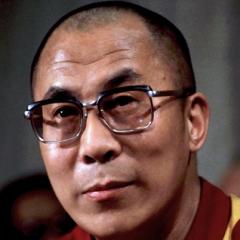
Dalai Lama
The Dalai Lama (born July 6, 1935) is the 14th Dalai Lama, a prominent religious leader of Tibetan Buddhism's Gelug school. Born as Tenzin Gyatso in Qinghai Province, China, he is recognized as an incarnation of Avalokiteshvara. He advocates non-violence, peace, and interfaith dialogue, and was awarded the Nobel Peace Prize in 1989. However, his political activities are viewed by the Chinese government as separatist, and he has lived in exile in India since 1959. His influence remains controversial, blending religious authority with political dissent. more
You May Also Like
“If today I stand here as a revolutionary, it is as a revolutionary against the Revolution.”
Source: My new order
“I joined the party because I was a revolutionary, not because of any ideological nonsense.”
Source: THE
Source: Adolf Hitler from Speeches 1933-1938
Source: Hitler, 1889-1936: Hubris