Quotessence
Home / Quotes / Quote by Mary Midgley

Quote by Mary Midgley

“It is extremely urgent to try and adapt our thoughts realistically to a world which has no fixed general direction either upward or downward, but is likely to vary largely according to what we do.”

Quote by Mary Midgley

Author
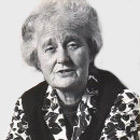
Mary Midgley
Mary Midgley

Mary Midgley is a renowned British philosopher known for her contributions to the philosophy of science and moral philosophy. Her work emphasizes the connection between science and morality, and critiques reductionist and mechanistic views. Born on September 13, 1919, Midgley's philosophical ideas have had a profound impact on contemporary philosophical and scientific discussions. more

You May Also Like

“Our understanding of early Christian beginnings is usually monolithic. It is much determined by the Acts of the Apostles, which pictures a straightforward development from the primitive community in Jerusalem founded on Pentecost to the world-wide mission of Paul climaxing with his arrival in Rome, the political centre of the Greco-Roman world. The Pauline epistles are understood not so much as historical sources reflecting a much more multifaceted early Christian situation fraught with tensions but as theological treatises expounding and defending the doctrine of justification by faith.”

“All fundamentalist theologians make the ordinances of creation an essential part of creation and absolutize them. Women belong at home, fulfil their life through motherhood, by caring for their husbands and serving them. The fixed role pattern of one particular economic and family order is transformed into an order willed by God and given by creation. With a methodologically similar logic, slaves were understood as those elected by God to serve the whites.”

“For me as a woman pride is not really sin, but rather something that I still have to learn. The male conception of the person who rebels against God by affirming himself, by acting proudly, arrogantly, and without constraints, is not a woman's concern. Rather, we women are in danger of not developing any pride, of never becoming independent, of constantly remaining within too narrow boundaries.”