“I don't know why I told this story. I could just as well have told another. Perhaps some other time I'll be able to tell another. Living souls, you will see how alike they are.”
Quote by Samuel Beckett
Work
I Can't Go On, I'll Go On: A Samuel Beckett Reader
This reader offers a comprehensive selection of Samuel Beckett's most significant writings, showcasing his unique literary style and profound philosophical musings. The collection includes excerpts from his plays, novels, and poetry, providing readers with a comprehensive understanding of Beckett's literary contributions and his exploration of themes such as existentialism, the human condition, and the absurd. more
Author
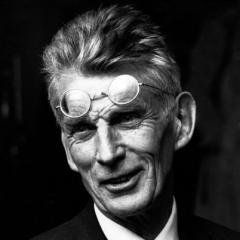
Samuel Beckett
Samuel Beckett was an Irish novelist, playwright, and poet, widely regarded as one of the most influential writers of the 20th century. His works are characterized by their minimalist style, existential themes, and use of language. His most famous works include 'Waiting for Godot' and 'Molloy'. Beckett was awarded the Nobel Prize in Literature in 1969. more
You May Also Like
Source: Delphi Complete Works of A. E. Housman (Illustrated)
Source: The Consolation of Philosophy
Source: DANIEL DEFOE Ultimate Collection: 50+ Adventure Classics, Pirate Tales & Historical Novels - Including Biographies, Historical Works, Travel Sketches, Poems & Essays (Illustrated): Robinson Crusoe, The History of the Pirates, Captain Singleton, Memoirs of a Cavalier, A Journal of the Plague Year, Moll Flanders, Roxana, The History of the Devil, The King of Pirates and many more
Source: The Thousandfold Thought: The Prince of Nothing, Book Three (The Prince of Nothing)
Source: The Electric Michelangelo