Quotessence
Home / Quotes / Quote by Richard Holloway

Quote by Richard Holloway

“As we have seen so often in this book, religion may begin with mystical experiences but it always leads to politics. It starts with the voice heard by the prophets who are its chosen instruments. And what they hear always leads to actions that affect the way people live: with politics. Sometimes the politics are bad. People are persecuted for following the wrong faith or for listening to the wrong voice. Or they are forced to embrace the message announced by the latest hot prophet. So the history of religion becomes a study in different forms of oppression. But sometimes the politics are good. They are about liberation, not oppression. We saw good politics in the stand the Pennsylvanian Quakers made against slavery in 1688. And in the African American Church today the politics of Christianity are still about liberation. The tactics of Moses and the promises of Jesus are used to make the world a better place. Religion is no longer used as an opiate to dull the pain of injustice and inequality but as a stimulant to overcome it. That’s what keeps many people in the religion game.”

Quote by Richard Holloway

Work

A Little History of Religion

Browse quotes and source details for this work. more

Author
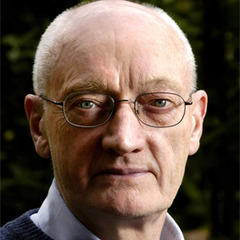
Richard Holloway
Richard Holloway

Richard Holloway is a renowned British writer and theologian, born on November 26, 1933. Known for his profound insights into religion, philosophy, and culture, he has authored numerous works that cover religious criticism, literary commentary, and philosophical thought. more

You May Also Like

“So what do we do when we feel drained and empty? When no one understands our suffering and no one seems to care? When we feel discouraged and tired and unbearably lonely? Read the Bible and pray. Read the Bible even when it feels like eating cardboard. And pray even when it feels like talking to a wall. Does it sound simple? It is. Does it also sound exceedingly hard? It is that as well. But reading the Bible and praying is the only way I have ever found out of my grief. There are no shortcuts to healing. When I say read, I don’t mean just reading words for a specific amount of time. I mean meditating on them. Writing down what God is saying to me. Asking God to reveal himself to me. Believing God uses Scripture to teach and to comfort me. To teach me wonderful things in his law (Ps. 119:18). To comfort me with his promises (Ps. 119:76). Reading this way changes cardboard into manna. I echo Jeremiah who said, “Your words were found, and I ate them, and your words became to me a joy and the delight of my heart” ( Jer. 15:16).”

“EVERYDAY ADVENTURE: LIVING THE MYSTERY OF MARRIAGE “See marriage as the high risk, even heroic, adventure that it is, in which one risks one's all in a partnership, filled with hope, 'till death do us part.” Leon R. Kass, Wing to Wing and Oar to Oar Every marriage, family, church and community needs to have a conversation about the future of marriage. This conference is the place to begin to prepare yourself for these crucial conversations.”

“Chapter 8: Genesis 45 1 And Yosef (Joseph) could not control himself for all the posted-persons upon him, and [he] called [out], “Remove every man from upon me!” And a man did not stand with him in the confessing of Yosef (Joseph) to his brothers. 2 And [he] gave his voice in crying, and [they] heard – [all of] Mitzraim (Egypt) – and the house of Pharaoh heard. 3 And Yosef (Joseph) said to his brothers, “I [am] Yosef! Does my father still live?!” And his brothers could not answer him because [they] were terrified from his face.”

“Chapter 1: Genesis 37 1 And Ya'akov (Jacob) sat in the land of the residence of his father in the land of K'na'an (Canaan). 2 These are the [descendents in the] genealogy of Ya'akov (Jacob): Yosef (Joseph) [was] seventeen years old, [he] would shepherd with his brothers among the flock [of animals], and he [was merely] a youth with the sons of Bilhah and with the sons of Zilpah (the women of his father), and Yosef (Joseph) brought their slander – [it was] evil – to their father”