Quotessence
Home / Quotes / Quote by Charles Babbage

Quote by Charles Babbage

Work

Reflections on the Decline of Science in England: And on Some of Its Causes

This work delves into the historical and societal reasons behind the perceived waning of scientific advancements in England. more

Author
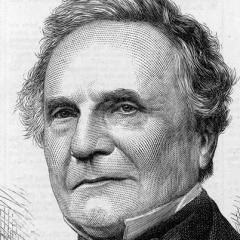
Charles Babbage
Charles Babbage

Charles Babbage, born on December 26, 1791 and died on October 18, 1871, was a renowned British mathematician, inventor, and engineer, often referred to as the 'father of computers'. He made significant contributions in the fields of mathematics, astronomy, and mechanical engineering, and his designs of the Difference Engine and the Analytical Engine laid the foundation for the development of computer science. more

You May Also Like

“It is notorious that the same discovery is frequently made simultaneously and quite independently, by different persons. Thus, to speak of only a few cases in late years, the discoveries of photography, of electric telegraphy, and of the planet Neptune through theoretical calculations, have all their rival claimants. It would seem, that discoveries are usually made when the time is ripe for them - that is to say, when the ideas from which they naturally flow are fermenting in the minds of many men.”

“Just by studying mathematics we can hope to make a guess at the kind of mathematics that will come into the physics of the future... If someone can hit on the right lines along which to make this development, it may lead to a future advance in which people will first discover the equations and then, after examining them, gradually learn how to apply them... My own belief is that this is a more likely line of progress than trying to guess at physical pictures.”

“Let us keep the discoveries and indisputable measurements of physics. But ... A more complete study of the movements of the world will oblige us, little by little, to turn it upside down; in other words, to discover that if things hold and hold together, it is only by reason of complexity, from above.”

“Most of the crackpot papers which are submitted to The Physical Review are rejected, not because it is impossible to understand them, but because it is possible. Those which are impossible to understand are usually published. When the great innovation appears, it will almost certainly be in a muddled, incomplete and confusing form. To the discoverer himself it will be only half-understood; to everybody else it will be a mystery. For any speculation which does not at first glance look crazy, there is no hope.”

“Next came the Patent laws. These began in England in 1624; and, in this country, with the adoption of our constitution. Before then [these?], any man might instantly use what another had invented; so that the inventor had no special advantage from his own invention. The patent system changed this; secured to the inventor, for a limited time, the exclusive use of his invention; and thereby added the fuel of interest to the fire of genius, in the discovery and production of new and useful things.”