Quotessence
Home / Quotes / Quote by Albert Szent-Gyorgyi

Quote by Albert Szent-Gyorgyi

“I am not religious, but I am a pious man... A religious man has a definite religion. He says "God is there" or "God is there," "God is there." "Your god is not my god, and that's all." But the pious man, he just looks out with awe, and says, "where is God?" And "well, I don't understand it and I would like to know what this creation really means." That is a pious man, who is really touched by the greatness of nature and of the creation.”

Quote by Albert Szent-Gyorgyi

Author
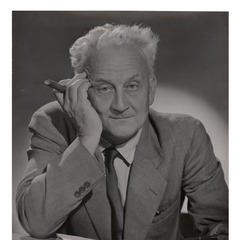
Albert Szent-Gyorgyi

Albert Szent-Gyorgyi was a renowned physiologist born on September 16, 1893, in Hungary, and passed away on October 22, 1986. He made significant contributions to biochemistry, particularly in the study of vitamins, for which he was awarded the Nobel Prize in Physiology or Medicine in 1937. more

You May Also Like

“If a baby really has no awareness of himself and is totally thing-directed and at the same time all his states of mind are projected onto things, our second paradox makes sense: on the one hand, thought in babies can be viewed as pure accommodation or exploratory movements, but on the other this very same thought is only one, long, completely autistic waking dream.”

“Before games are played in common, no rules in the proper sense can come into existence. Regularities and ritualized schemas are already there, but these rites, being the work of the individual, cannot call forth that submission to something superior to the self which characterizes the appearance of any rule.”

“As far as the game of marbles is concerned, there is therefore no contradiction between the egocentric practice of games and the mystical respect entertained for rules. This respect is the mark of a mentality fashioned, not by free cooperation between equals, but by adult constraint.”

“In certain circumstances where he experiments in new types of conduct by cooperating with his equals, the child is already an adult. There is an adult in every child and a child in every adult. ... There exist in the child certain attitudes and beliefs which intellectual development will more and more tend to eliminate: there are others which will acquire more and more importance. The later are not derived from the former but are partly antagonistic to them.”