Quotessence
Home / Quotes / Quote by Edmund Burke

Quote by Edmund Burke

“Knowledge of those unalterable Relations which Providence has ordained that every thing should bear to every other...To these we should conform in good Earnest; and not think to force Nature, and the whole Order of her System, by a Compliance with our Pride, and Folly, to conform to our artificial Regulations.”

Quote by Edmund Burke

Work

Delphi Complete Works of Edmund Burke (Illustrated)

The Delphi Complete Works of Edmund Burke (Illustrated) is a meticulously curated compilation of Burke's extensive writings, offering readers a comprehensive view of his political philosophy, social commentary, and historical analysis. This illustrated edition aims to provide a visually engaging experience, making the classic texts more accessible to contemporary readers. more

Author
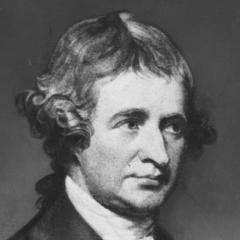
Edmund Burke
Edmund Burke

Edmund Burke, a British statesman and writer, was born on January 12, 1729, and died on July 9, 1797. He was one of the most prominent political thinkers of the 18th century, known for his profound insights into liberty, democracy, and conservatism. more

You May Also Like

“Religion, as distinguished from modern paganism, implies a life in conformity with nature. It may be observed that the natural life and the supernatural life have a conformity to each other which neither has with the mechanistic life...A wrong attitude towards nature implies, somewhere, a wrong attitude towards God...[We should] struggle to recover the sense of relation to nature and to God.”

“The prevailing attitude towards nature is that form of heresy which denies substance and, in doing so, denies the rightfulness of creation. We have said - to the point of repletion, perhaps - that man is not to take his patterns from nature; but neither is he to waste himself in seeking to change her face.”

“The true religion, it is said, is service to mankind; but this service seems to take the form of securing for him an unconditional victory over nature. Now this attitude is impious, for, as has been noted, it violates the belief that creation or nature is fundamentally good, that the ultimate reason for its laws is a mystery, and that acts of defiance such as are daily celebrated by the newspapers are subversive of cosmos.”

“Triumphs against the natural order of living exact unforeseen payments. At the same time that man attempts to straighten a crooked nature, he is striving to annihilate space, which seems but another phase of the war against substance. We ignore the fact that space and matter are shock absorbers; the more we diminish them the more we reduce our privacy and security.”

“Nature is not something to be fought, conquered and changed according to any human whims. To some extent, of course, it has to be used. But what man should seek in regard to nature is not a complete domination but a modus vivendi - that is, a manner of living together, a coming to terms with something that was here before our time and will be here after it. The important corollary of this doctrine, it seems to me, is that man is not the lord of creation, with an omnipotent will, but a part of creation, with limitations, who ought to observe a decent humility in the face of the inscrutable.”