Quotessence
Home / Quotes / Quote by Richard M. Weaver

Quote by Richard M. Weaver

“Nature is not something to be fought, conquered and changed according to any human whims. To some extent, of course, it has to be used. But what man should seek in regard to nature is not a complete domination but a modus vivendi - that is, a manner of living together, a coming to terms with something that was here before our time and will be here after it. The important corollary of this doctrine, it seems to me, is that man is not the lord of creation, with an omnipotent will, but a part of creation, with limitations, who ought to observe a decent humility in the face of the inscrutable.”

Quote by Richard M. Weaver

Author
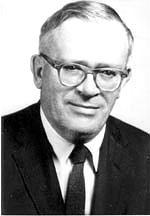
Richard M. Weaver
Richard M. Weaver

Richard M. Weaver was an influential American philosopher, born on March 3, 1910, and died on April 1, 1963. He is known for his profound insights into language, culture, and political philosophy, particularly for his work 'The Language of Art', which explored the nature of language and its relationship to reality. more

You May Also Like

“The modern spectacle of vanished forests and eroded lands, wasted petroleum and ruthless mining, national debts recklessly increased until they are repudiated, and continual revision of positive law, is evidence of what an age without veneration does to itself and its successors.”

“True conformity to the dictates of nature requires reverence for the past and solicitude for the future. 'Nature' is not simply the sensation of the passing moment; it is eternal, though we evanescent men experience only a fragment of it. We have no right to imperil the happiness of posterity by impudently tinkering with the heritage of humanity.”

“If men are discharged of reverence for ancient usage, they will treat this world, almost certainly, as if it were their private property, to be consumed for their sensual gratification; and thus they will destroy in their lust for enjoyment the property of future generations, of their own contemporaries, and indeed their very own capital.”

“The decay of old aristocratic prejudices against greedy speculation, the undermining of orthodox Christian faith (which forbids avarice)... the debauching of agriculture to a gross money-getting concern: these particular aspects of a vast and voracious concentration upon profits are so many illustrations of our sinning confusion of values.”

“To complete the rout of traditionalists, in America an impression began to arise that the new industrial and acquisitive interests are the conservative interest, that conservatism is simply a political argument in defense of large accumulations of private property, that expansion, centralization, and accumulation are the tenets of conservatives. From this confusion, from the popular belief that Hamilton was the founder of American conservatism, the forces of tradition in the United States never have fully escaped.”