Quotessence
Home / Quotes / Quote by Russell Kirk

Quote by Russell Kirk

Work

The Conservative Mind: From Burke to Eliot

This book delves into the intellectual foundations of conservatism, examining the ideas and principles that have shaped the political and cultural landscape over centuries. more

Author
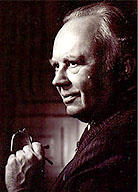
Russell Kirk
Russell Kirk

Russell Kirk, an American historian, was born in October 1918 and died on April 29, 1994. His research focused on conservative thought, American history, and culture, and had a profound impact on 20th-century American politics and culture. more

You May Also Like

“If men are discharged of reverence for ancient usage, they will treat this world, almost certainly, as if it were their private property, to be consumed for their sensual gratification; and thus they will destroy in their lust for enjoyment the property of future generations, of their own contemporaries, and indeed their very own capital.”

“The decay of old aristocratic prejudices against greedy speculation, the undermining of orthodox Christian faith (which forbids avarice)... the debauching of agriculture to a gross money-getting concern: these particular aspects of a vast and voracious concentration upon profits are so many illustrations of our sinning confusion of values.”

“To complete the rout of traditionalists, in America an impression began to arise that the new industrial and acquisitive interests are the conservative interest, that conservatism is simply a political argument in defense of large accumulations of private property, that expansion, centralization, and accumulation are the tenets of conservatives. From this confusion, from the popular belief that Hamilton was the founder of American conservatism, the forces of tradition in the United States never have fully escaped.”

“Rather than ennobling the public mind and cementing the social fabric, applied science speedily became the chief weapon of a gross individualism, which was anathema to the frugal and righteous (John Quincy) Adams, the source of enormous fortunes divorced from duty, the instrument of unscrupulous ambition and rapacious materialism. Presently, it came to scar the very of the country which Adams loved, a disfiguring process uninterrupted since his day.”

“The automobile, practical since 1906, was proceeding to disintegrate and stamp anew the pattern of communication, manners, and city life in the United States, by 1918; before long, men would begin to see that the automobile, and the mass production techniques which made its possible, could alter the national character and morality more thoroughly than could the most absolute of tyrants. As a mechanical Jacobin, it rivaled the dynamo. The productive process which made these vehicles cheap was still more subversive of the old ways than was the gasoline engine itself.”

“Humility, which Burke ranked high among the virtues, is the only effectual restraint upon this congenital vanity; yet our world has nearly forgotten the nature of humility. Submission to the dictates of humility formerly was made palatable to man by the doctrine of grace; that elaborate doctrine has been overwhelmed by modern presumption.”

“The principle of real leadership ignored, the immortal objects of society forgotten, practical conservatism degenerated into mere laudation of private enterprise, economic policy almost wholly surrendered to special interests.”

“To check centralization and usurping of power ... we require a new laissez-faire. The old laissez-faire was founded upon a misapprehension of human nature, an exultation of individuality (in private character often a virtue) to the condition of a political dogma, which destroyed the spirit of community and reduced men to so many equipollent atoms of humanity, without sense of brotherhood or purpose.”

“Why do we not exhaust the heritage of the ages, spiritual and material for our immediate pleasure, and let posterity go hang? So far as simple rationality is concerned, self-interest can advance no argument against the appetite of present possessors. Yet within some of us, a voice that is not the demand of self-interest or pure rationality says that we have no right to give ourselves enjoyment at the expense of our ancestors' memory and our descendants' prospects. We hold our present advantages only in trust.”