Quotessence
Home / Quotes / Quote by Odd Nerdrum

Quote by Odd Nerdrum

“When you choose your profession, you also choose your own downfall or success. If one chooses to become an artist it is 99% certain that it will go to hell. So you should not become that. If you study economics on Oslo, 99% of all students will do very well and 1% will reach the top.”

Quote by Odd Nerdrum

Author
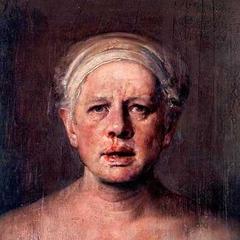
Odd Nerdrum
Odd Nerdrum

Odd Nerdrum, born April 8, 1944 in Oslo, Norway, is a controversial contemporary painter known for his baroque, figurative style that rejects modernist abstraction. Calling himself a founder of the "Kitsch" movement, Nerdrum emphasizes classical technique, narrative depth and emotional intensity. Over a six‑decade career his works—often set in mythic or apocalyptic scenes—explore mortality, power and the human condition. His paintings are held in major museums worldwide and have profoundly influenced a new generation of realist artists. more

You May Also Like

“I believe in positive despotism. That means an exchange between people. I'm thinking about the fact that someone serves me breakfast in my bed. I can not see anything wrong in that. Because everything is a question of exchanges between people. Everyone has some specific possibilities and can to a certain extent do whatever they want. If one wants to become rich one can study economy and if one wants to be poor one can choose to become a professor in butterfly wings for example. So we can choose.”

“I believe one must be such a big egoist that it is possible to avoid the big tendencies that cut of your head. What we call fascism and things like that. It is about egoism. When you are egoistic enough you avoid such things. You become an incurable individualist and in that case you are sailing in your own sea anyway. What is very enjoyable for the individualist is to find this kind of "happy spaces" to be in and to live in.”

“Contemporary art is based on that an artist is supposed to go into art history in the same way as an art historian. When the artist produces something he or she relates to it with the eye of an art historian/critic. I have the feeling that when I am working it is more like working with soap opera or glamour. It is emotional and not art criticism or history of art.”