“[Freedom] is the greatest of political goods. I do not say freedom is the greatest of all goods: the best things come from within they are such things as creative art, and love, and thought. Such things can be helped or hindered by political conditions, but not actually produced by them; and freedom is, both in itself and in its relation to these other goods the best thing that political and economic conditions can secure.”
Quote by Bertrand Russell
Work
Proposed Roads to Freedom
This book delves into the concepts and ideas that can lead to freedom in various aspects of life, including political, social, and personal realms. more
Author
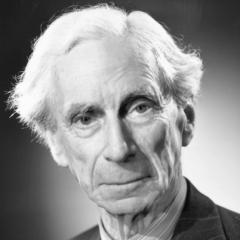
Bertrand Russell
Bertrand Russell was a British philosopher, mathematician, and logician born on May 18, 1872, and died on February 2, 1970. He is known for his contributions to logic and mathematics, particularly in the fields of mathematical logic and philosophical analysis. His works spanned a wide range of subjects, including ethics, political philosophy, history, and literary criticism. more
You May Also Like
Source: Mysticism and Logic
Source: Why I Am Not a Christian
“A world without delight and without affection is a world destitute of value.”
Source: The Scientific Outlook
“No rules, however wise, are a substitute for affection and tact.”
Source: In Praise of Idleness and Other Essays
Source: Power: A New Social Analysis
Source: Why I Am Not a Christian
Source: Détente Or Destruction, 1955-57