Quotessence
Home / Quotes / Quote by Lynne Stewart

Quote by Lynne Stewart

“How could I have been the valedictorian, the smartest, and never known Harlem existed? As a result, I began a lifelong learning experience, because I could not accept what the party line was with education - that these people want to live like this, these people don't have ambition, they don't want to work. You know, all the usual bullshit.”

Quote by Lynne Stewart

Author
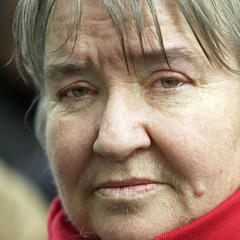
Lynne Stewart
Lynne Stewart

Lynne Stewart was an American civil rights and human rights attorney. She was known for her work in high-profile cases and her advocacy for political prisoners. Born on October 8, 1939, Stewart passed away on March 7, 2017. more

You May Also Like

“You make yourself available to the movement. At that point, for example, battered wives were not on the top of anybody's list. It was, "What did you do to provoke him? Why would he do that to you?" Stuff like that. I called the hotline, and I said I was available to help get orders of protection. I would help do whatever needed to be done, serve their papers. Many times, they'd go to court, get their papers, and then be afraid to serve them on the guy. So that was one source of income. But I took anything that came across my doorstep.”

“I don't buy into the idea that an Irish writer should write about Ireland, or a gay writer should write about being gay. But when I found the right story, I saw it as an opportunity to write about being a teenager and being gay. Most people, whether you're gay or straight or whatever, have experienced that relationship where one person is much more interested than the other.”

“I would never take a case that had to do with abusing children. They're the true innocents. All of the rest of us, we have smears and stains, but they're helpless. I couldn't add my talent, which is prodigious, to a defense of someone even accused of hurting a child. I would never defend a cop - though I did on a few private cases, when cops were acting not as cops but as private citizens. Other than that, I represented everybody who came by.”

“I loved the work. I missed it for years after I was arrested. I couldn't drive past 100 Centre New York City Criminal Court, that whole area, without crying, seeing people going to court and knowing I couldn't do that anymore. I still do miss it. I don't think I could ever go back. Maybe I could consider second-seating my son or someone else whose work I respect. But I could not take on any responsibility. I'm out of step; I haven't kept up.”

“Today, it's not the same playing field as when I first became a lawyer in 1977, where the government had been restricted by our wonderful Supreme Court Justice Earl Warren's court rulings. Now it's all going the other way, the flow is against the defendant, against anything that could really help a client. But you still fight it, you do what you can do. It's all there is.”