Quotessence
Home / Quotes / Quote by John Guare

Quote by John Guare

“I am the same artist with the same nagging questions I had in my early 20's. What's real and what isn't? How do we tell what's real in our lives? How do we see things as they are? What is my role in life? If the Signature hadn't forced the issue by devoting its season to my plays, I could at least believe I had changed. Really, they're all the same! What is SIX DEGREES OF SEPARATION but THE HOUSE OF BLUE LEAVES with money?”

Quote by John Guare

Author
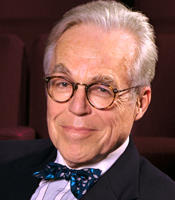
John Guare
John Guare

John Guare, born on February 5, 1938, is a renowned American playwright known for his humor and insightful exploration of themes. His works, such as 'Six Degrees of Separation' and 'The House of Blue Leaves', have been widely appreciated by audiences. more

You May Also Like

“Consider: for all the gobbledegook [film studio] executives spout about backstory, all that we, the audience, want to know is what happens next. That's the only thing that's going on. . . . Character is nothing other than action, and character-driven means The plot stinks, and you'd better hope the star is popular enough to open the movie in spite of it.”

“There's this sense of being strange, which is at the heart of every creative person. Every writer, every actor, every director knows who Ripley is. We've made careers and lives out of pretending, making things up, inhabiting other people's stories and lives. That's what I do every day. . . . The story is so audacious and subversive: a central character who behaves badly and isn't apparently caught. That intrigued me no end.”

“What I find interesting is how close you can run the laughter along the seam of seriousness, and occasionally cross it, so that half the house genuinely doesn't know whether to laugh or cry. Custard pie humour is fairly universal, but at the other end, which I'm more interested in, there's the humour that hovers on the darkness, that walks in the shadow of something else, not always that obvious.”

“Regarding pushing the form, ideas interest me more than form. I think you can write a very subversive play in a three-act structure. The content makes the play. I feel the form is simply dressing, because ultimately, you want to communicate to the audience, and sometimes the best way to do that is to present a provocative idea in a format that is comfortable for them to receive. Then the idea will come through directly, right in solar plexus. After all, I want to make a living as an artist, and that means speaking to the audience in a form they can understand.”

“Even in the things that look most frivolous there has to be the threat of something quite painful to make the comedy work. I suppose the play of mine that's best know is NOISES OFF, which everyone thinks is a simple farce about actors making fools of themselves. But I think it makes people laugh because everyone is terrified inside themselves of having some kind of breakdown, of being unable to go on. When people laugh at that play, they're laughing at a surrogate version of the disaster which might occur to them.”

“Plays are literature: the word, the idea. Film is much more like the form in which we dream - in action and images (Television is furniture). I think a great play can only be a play. It fits the stage better than it fits the screen. Some stories insist on being film, can't be contained on stage. In the end, all writing serves to answer the same question: Why are we alive? And the form the question takes - play, film, novel - is dictated, I suppose, by whether its story is driven by character or place.”

“There's very little in the substance of [THE LADY IN THE VAN] which is not fact though some adjustments have had to be made. Over the years Miss Shepherd was visited by a succession of social workers so the character in the play is a composite figure. . . . A composite too are the neighbours, Pauline and Rufus, though I have made Rufus a publisher in remembrance of my neighbour, the late Colin Haycraft, the proprietor of Duckworth's.”