Quotessence
Home / Quotes / Quote by Murray Bookchin

Quote by Murray Bookchin

Work

Urbanization without cities: the rise and decline of citizenship

The text delves into the complexities of how citizenship is shaped and transformed in areas experiencing urbanization without the presence of conventional cities. It investigates the historical and contemporary trends, analyzing the implications for social, economic, and political structures. more

Author
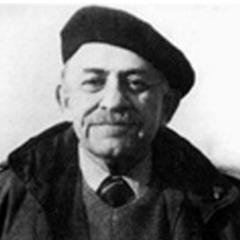
Murray Bookchin
Murray Bookchin

Murray Bookchin was an American author, philosopher, and social theorist known for his work in social ecology and anarchism. His most famous book, 'The Ecology of Freedom', explores the relationship between ecology and social theory. more

You May Also Like

“We are part of nature, a product of a long evolutionary journey. To some degree, we carry the ancient oceans in our blood. … Our brains and nervous systems did not suddenly spring into existence without long antecedents in natural history. That which we most prize as integral to our humanity - our extraordinary capacity to think on complex conceptual levels - can be traced back to the nerve network of primitive invertebrates, the ganglia of a mollusk, the spinal cord of a fish, the brain of an amphibian, and the cerebral cortex of a primate.”

“Until society can be reclaimed by an undivided humanity that will use its collective wisdom, cultural achievements, technological innovations, scientific knowledge, and innate creativity for its own benefit and for that of the natural world, all ecological problems will have their roots in social problems.”

“If we recognise that every ecosystem can also be viewed as a food web, we can think of it as a circular, interlacing nexus of plant animal relationships (rather than a stratified pyramid with man at the apex)… Each species, be it a form of bacteria or deer, is knitted together in a network of interdependence, however indirect the links may be.”

“To speak of ‘limits to growth’ under a capitalistic market economy is as meaningless as to speak of limits of warfare under a warrior society. The moral pieties, that are voiced today by many well-meaning environmentalists, are as naive as the moral pieties of multinationals are manipulative. Capitalism can no more be ‘persuaded’ to limit growth than a human being can be ‘persuaded’ to stop breathing. Attempts to ‘green’ capitalism, to make it ‘ecological’, are doomed by the very nature of the system as a system of endless growth.”