Quotessence
Home / Quotes / Quote by Multatuli

Quote by Multatuli

Work

The Oyster & the Eagle: Selected Aphorisms and Parables of Multatuli

This volume compiles a selection of the profound and often critical thoughts of Multatuli, a writer renowned for his sharp observations on the human condition and societal issues. His aphorisms and parables delve into the complexities of colonial rule and the struggle for justice, offering a window into the moral and ethical dilemmas faced by individuals in a colonial society. more

Author
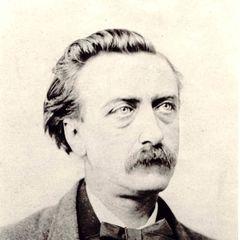
Multatuli
Multatuli

Multatuli, whose real name was Eduard Douwes Dekker, was a Dutch writer. His work 'The Diary of a Visit to the Dutch Antilles' exposed the残酷 realities of Dutch colonial rule and conducted a profound critique of colonialism. more

You May Also Like

“We think of religion as the symbolic expression of our highest moral ideals; we think of magic as a crude aggregate of superstitions. Religious belief seems to become mere superstitious credulity if we admit any relationship with magic. On the other hand our anthropological and ethnographical material makes it extremely difficult to separate the two fields.”

“There is a conceptual depth as well as a purely visual depth. The first is discovered by science; the second is revealed in art. The first aids us in understanding the reasons of things; the second in seeing their forms. In science we try to trace phenomena back to their first causes, and to general laws and principles. In art we are absorbed in their immediate appearance, and we enjoy this appearance to the fullest extent in all its richness and variety. Here we are not concerned with the uniformity of laws but with the multiformity and diversity of intuitions.”

“The sacrifice to Legba was completed; the Master of the Crossroads had taken the loas' mysterious routes back to his native Guinea. Meanwhile, the feast continued. The peasants were forgetting their misery: dance and alcohol numbed them, carrying away their shipwrecked conscience in the unreal and shady regions where the savage madness of the African gods lay waiting.”

“The old men of the village of Mahotière say that the Mistress of the Water is a mulatto woman. At midnight she comes out of the spring and sings while combing her dripping long hair, which makes a sound sweeter than a violin. It is a song of perdition for whomever hears it. There is no sign of the Cross, no "Our Father" to save him. Her curse takes him like a fish in a net and the Mistress of the Water awaits him on the edge of the spring and smiles upon him and tells him to follow her to the depths, from which he will never return.”

“A tree is made to live in peace in the color of day and in friendship with the sun, the wind and the rain. Its roots plunge in thefat fermentation of the soil, sucking in its elemental humors, its fortifying juices. Trees always seem lost in a great tranquil dream. The dark rising sap makes them groan in the warm afternoons. A tree is a living being that knows the course of the clouds and presses the storms because it is full of birds' nests.”