Quotessence
Home / Quotes / Quote by Martin Luther King, Jr.

Quote by Martin Luther King, Jr.

Work

The Wisdom of Martin Luther King, Jr

This work presents the philosophical and ethical teachings of Martin Luther King Jr., the Baptist minister and civil rights leader who became a symbol of the movement for racial equality in the United States. Through his sermons, speeches, and writings, the volume explores principles of nonviolence, justice, and human dignity that defined King's approach to social change. The compilation draws from his profound speeches including the historic 'I Have a Dream' address delivered during the 1963 March on Washington, as well as his Nobel Peace Prize acceptance remarks and pastoral letters. King's commitment to Christian love and nonviolent resistance serves as the moral foundation for the teachings gathered in this collection, offering readers insight into the spiritual and ethical framework that guided his quest for civil rights and equality. more

Author
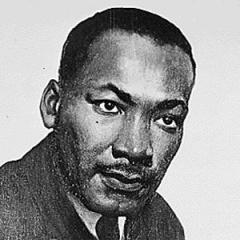
Martin Luther King, Jr.

Martin Luther King Jr. was an American civil rights activist known for his nonviolent protest and advocacy for equal rights. His 'I Have a Dream' speech at the Lincoln Memorial in 1963 became a significant milestone in the American civil rights movement. more

You May Also Like

“The most obvious inspiration to be brave is that we all feel it: you can't have free expression right now in a very wide range of countries. It takes a lot of guts for writers and journalists in those countries to stand up against repression and do what they do. Russia is a case in point where, as you know, journalists have an embarrassing habit of being killed for their reporting.”

“Vulnerability of artists is definitely what makes organizations like PEN necessary because, as I tried to argue, the actual work that writers and artists do has an ornery way of surviving. Particularly in this age of the internet, it is very easy for forbidden work to be found online somewhere if you know where to look. Artists themselves, however, are in increasing danger, and not just artists. The great concern is that year after year, rising numbers of journalists are being killed in pursuit of their work.”

“I suppose authoritarians don't like being made fun of because authoritarian rulers have a very inflated sense of themselves and don't like being deflated, which makes it all the more important to continue to deflate them. These are very courageous people around the world who poke fun from inside these societies. So, we now have to broaden the definition of what we mean by "writer" to include bloggers, cartoonists, song writers, visual artists - all these people are, in different ways, quite brave.”

“I have a general feeling that writers and artists who are in this peculiar situation, of being a persecuted artist, all anyone ever asks about is the persecution. It may well be that's the last thing in the world they want to talk about. There were many years in which every journalist in the world wanted to talk to me, but nobody wanted to talk to me about my work. That felt deeply frustrating because I felt there was an attempt to stifle me as an artist. The best revenge I could have was to write.”

“There's no point going to a country which is torturing people to ask them to stop if they can point out that the United States is doing it too. It enormously weakens the argument. Back in the early days of the Bush administration, PEN made a decision that we would try and make human rights issues and civil rights issues in this country part of the priority, and not just international issues, which had more or less been the priority up until then.”