Quotessence
Home / Quotes / Quote by Carl Jung

Quote by Carl Jung

“All ages before ours believed in gods in some form or other. Only an unparalleled impoverishment in symbolism could enable us to rediscover the gods as psychic factors, which is to say, as archetypes of the unconscious. No doubt this discovery is hardly credible as yet.”

Quote by Carl Jung

Author
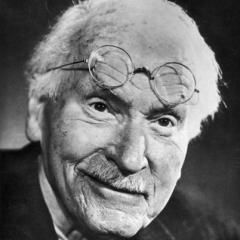
Carl Jung
Carl Jung

Carl Jung, born on July 26, 1875, and died on June 6, 1961, was a renowned Swiss psychiatrist and psychologist. His theories have had a profound impact on fields such as psychology, psychiatry, and religious studies. Jung proposed the theory of personality types, the concept of the collective unconscious, and founded analytical psychology. more

You May Also Like

“My interests drew me in different directions. On the one hand I was powerfully attracted by science, with its truths based on facts; on the other hand I was fascinated by everything to do with comparative religion. [...] In science I missed the factor of meaning; and in religion, that of empiricism.”

“Modern man may assert that he can dispense with them, and he may bolster his opinion by insisting that there is no scientific evidence of their truth. But since we are dealing with invisible and unknowable things (for God is beyond human understanding, and there is no mean of proving immortality), why should we bother with evidence?”

“The discussion of the sexual problem is only a somewhat crude prelude to a far deeper question, and that is the question of the psychological relationship between the sexes. In comparison with this the other pales into insignificance, and with it we enter the real domain of woman. Woman's psychology is founded on the principle of Eros, the great binder and loosener, whereas from ancient times the ruling principle ascribed to man is Logos.”

“When we assume God to be a guiding principle well, sure enough, a god is usually characteristic of a certain system of thought or morality. For instance, take the Christian God, the summum bonum: God is love, love being the highest moral principle; and God is spirit, the spirit being the supreme idea of meaning. All our Christian moral concepts derive from such assumptions, and the supreme essence of all of them is what we call God.”

“Aging people should know that their lives are not mounting and unfolding but that an inexorable inner process forces the contraction of life. For a young person it is almost a sin and certainly a danger to be too much occupied with himself; but for the aging person it is a duty and a necessity to give serious attention to himself.”

“Every civilized human being, whatever his conscious development, is still an archaic man at the deeper levels of his psyche. Just as the human body connects us with the mammals and displays numerous relics of earlier evolutionary stages going back to even the reptilian age, so the human psyche is likewise a product of evolution which, when followed up to its origins, show countless archaic traits.”

“I know every numbskull will babble on about "black man," "maneater," "chance," and "retrospective interpretation," in order to banish something terribly inconvenient that might sully the familiar picture of childhood innocence. Ah, these good, efficient, healthy-minded people, they always remind me of those optimistic tadpoles who bask in a puddle in the sun, in the shallowest of waters, crowding together and amiably wriggling their tails, totally unaware that the next morning the puddle will have dried up and left them stranded.”

“Men that are free, well-born, well-bred, and conversant in honest companies, have naturally an instinct and spur that prompteth them unto virtuous actions, and withdraws them from vice, which is called honour. Those same men, when by base subjection and constraint they are brought under and kept down, turn aside from that noble disposition, by which they formerly were inclined to virtue, to shake off and break that bond of servitude, wherein they are so tyrannously enslaved; for it is agreeable with the nature of man to long after things forbidden, and to desire what is denied us.”