Quotessence
Home / Quotes / Quote by Charles Bukowski

Quote by Charles Bukowski

“The problem, as it was in those days during the war, was overtime. Those in control always preferred to overwork a few men continually, instead of hiring more people so everyone might work less. You gave the boss eight hours, and he always asked for more. He never sent you home after six hours, for example. You might have time to think.”

Quote by Charles Bukowski

Work

Factotum

Factotum is a semi-autobiographical novel that delves into the life of a writer who struggles to make ends meet while navigating the complexities of personal relationships and the challenges of the working world. more

Author

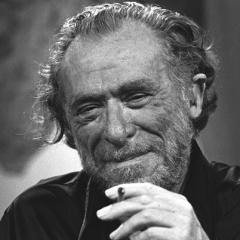
Charles Bukowski
Charles Bukowski

Charles Bukowski, born on August 16, 1920, was an influential American poet. Known for his unique style and profound depiction of the lives of the underclass in America, he is considered one of the representatives of the Beat Generation. more

You May Also Like

“To most of the roles society offers, I say, “You are made for more than that.” We inhabit, in the words of Ivan Illich, “a world into which nobody fits who has not been crushed and molded by sixteen years of formal education.” The very idea of having to be at a job “on time” was appalling to early industrial laborers, who also refused the numbing repetitiveness of industrial work until the specter of starvation compelled them. What truly self-respecting person would spend a life marketing soda pop or chewing gum unless they were somehow broken by repeated threats to survival? To participate in our society’s depredations is an indignity. [...] Very few of society’s usual positions can accommodate the enormous creative life-force of an unbroken human being. To keep the world under control demands that we bottle up this creative force and expend as much of it as possible in harmless ways—harmless to the status quo, that is, though not to the individual. All the addicts and alcoholics I have known—all of them!—are blessed (or cursed) with what seems to be an exceptional creative energy that is burned up in their addiction. Other people channel it into obsessions and compulsions, hobbies, nervous tics, excessive exercise, overeating, work, and the like, contributing to a more dilute version of the addict’s sense of life betrayed. When we submit to lesser lives, we cannot avoid a sense of self-betrayal: that we are complicit in the plunder of our most precious possession. The roles society offers do not befit the divine beings that we are. It is not merely that a career as a retail clerk is beneath my dignity; it is beneath anyone’s dignity. No one is meant to do such work for very long.”

“The more my thoughts wander the harder it gets- everything feels so disconnected. Me and my work, me and the factory, me and society. There's always something in the way. It's like we're touching, but we are not. What am I doing here? I've been living on this planet for more than twenty years, and I still can't talk properly, can't do anything that a machine can't do better.”

“The ability to free oneself from the common tradition, a sort of liberal enlightenment, seems likely to be the most suitable basis for such a business man’s success. And today that is generally precisely the case. Any relationship between religious beliefs and conduct is generally absent, and where any exists, at least in Germany, it tends to be of the negative sort. The people filled with the spirit of capitalism today tend to be indifferent, if not hostile, to the Church. The thought of the pious boredom of paradise has little attraction for their active natures; religion appears to them as a means of drawing people away from labor in this world. If you ask them what is the meaning of their restless activity, why they are never satisfied with what they have, thus appearing so senseless to any purely worldly view of life, they would perhaps give the answer, if they know any at all: “to provide for my children and grandchildren.” But more often and, since that motive is not peculiar to them, but was just as effective for the traditionalist, more correctly, simply: that business with its continuous work has become a necessary part of their lives. That is in fact the only possible motivation, but it at the same time expresses what is, seen from the viewpoint of personal happiness, so irrational about this sort of life, where a man exists for the sake of his business, instead of the reverse.”