“As children', wrote Alice Raikes (Mrs. Wilson Fox) in The Times, January 22, 1932, 'we lived in Onslow Square and used to play in the garden behind the houses. Charles Dodgson used to stay with an old uncle there, and walk up and down, his hands behind him, on the strip of lawn. One day, hearing my name, he called me to him saying, "So you are another Alice. I'm very found of Alices. Would you like to come and see something which is rather puzzling?" We followed him into his house which opened, as ours did, upon the garden, into a room full of furniture with a tall mirror standing across one corner.' "Now", he said giving me an orange, "first tell me which hand you have got that in." "The right" I said. "Now", he said, "go and stand before that glass, and tell me which hand the little girl you see there has got it in." After some perplexed contemplation, I said, "The left hand." "Exactly," he said, "and how do you explain that?" I couldn't explain it, but seeing that some solution was expected, I ventured, "If I was on the other side of the glass, wouldn't the orange still be in my right hand?" I can remember his laugh. "Well done, little Alice," he said. "The best answer I've heard yet." "I heard no more then, but in after years was told that he said that had given him his first idea for Through the Looking-Glass, a copy of which, together with each of his other books, he regularly sent me.”
Quote by Lewis Carroll
Author
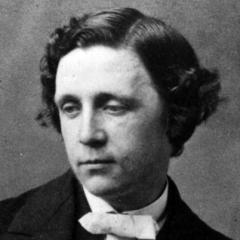
Lewis Carroll
Lewis Carroll, born Charles Lutwidge Dodgson, was an English writer, mathematician, logician, photographer, and children's author. He is best known for his novel Alice's Adventures in Wonderland, which is celebrated for its unique imagination, rich symbolism, and humor. more
You May Also Like
Source: The Love Of Three Oranges: A Play For The Theatre That Takes The Commedia Dell'arte Of Carlo Gozzi And Updates It For The New Millennium
Source: The Birth and Death of Meaning: An Interdisciplinary Perspective on the Problem of Man
Source: Voice of Reason
Source: The First Tycoon: The Epic Life of Cornelius Vanderbilt
Source: Privilege, Power, and Difference
Source: Fun Dip & Other Misfortunes
“Life keeps throwing me lemons because I make the best lemonade...”
Source: The Book of Secrets: Unlocking the Hidden Dimensions of Your Life