Quotessence
Home / Quotes / Quote by Isak Dinesen

Quote by Isak Dinesen

“The true aristocracy and the true proletariat of the world are both in understanding with tragedy. To them it is the fundamental principle of God, and the key,—the minor key,—to existence. They differ in this way from the bourgeoisie of all classes, who deny tragedy, who will not tolerate it, and to whom the word of tragedy means in itself unpleasantness.”

Quote by Isak Dinesen

Author
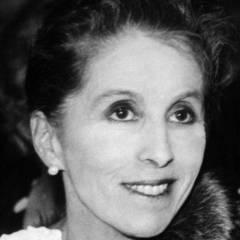
Isak Dinesen
Isak Dinesen

Isak Dinesen, known originally as Karen Blixen, was a Danish author renowned for her distinctive literary style and profound insights into human nature. Her works, which blend elements of realism and surrealism, are characterized by their brevity and depth. Born on April 17, 1885, and passing away on September 7, 1962, Dinesen spent her childhood and youth in Africa, an experience that profoundly influenced her writing. more

You May Also Like

“Sometimes it's important to dare to dream - small or big - like Mandela, Gandhi, Winfrey, Obama, Malala and Dr King. From Einstein to Hawking - the skies no limit. From Ali to the Williams sisters - through trials and talent find the champions within. Like my mother did to raise great kids. Like the one or many who run with this. Like the unsung heroes in every city and village. Like the kind of heart and selfless healers. Like every act of kindness you ever did and received. Like the human spirit beyond class, colour and creed. Like every soul who has raised our consciousness. From one to all - love IS all we have and need.”

“If we consider this official or elite multiculturalism as an ideological state apparatus we can see it as a device for constructing and ascribing political subjectivities and agencies for those who are seen as legitimate and full citizens and others who are peripheral to this in many senses. There is in this process an element of racialized ethnicization, which whitens North Americans of European origins and blackens or darkens their 'others' by the same stroke. This is integral to Canadian class and cultural formation and distribution of political entitlement. The old and established colonial/racist discourses of tradition and modernity, civilization and savagery, are the conceptual devices of the construction and ascription of these racialized ethnicities. It is through these 'conceptual practices of power' (Smith, 1990) that South Asians living in Canada, for example, can be reified as hindu or muslim, in short as religious identities.....We need to repeat that there is nothing natural or primordial about cultural identities - religious or otherwise - and their projection as political agencies. In this multiculturalism serves as a collection of cultural categories for ruling or administering, claiming their representational status as direct emanations of social ontologies. This allows multiculturalism to serve as an ideology, both in the sense of a body of content, claiming that 'we' or 'they' are this or that kind of cultural identities, as well as an epistemological device for occluding the organization of the social....an interpellating device which segments the nation's cultural and political space as well as its labour market into ethnic communities....Defined thus, third world or non-white peoples living in Canada become organized into competitive entities with respect to each other. They are perceived to have no commonality, except that they are seen as, or self-appellate as, being essentially religious, traditional or pre-modern, and thus civilizationally backward. This type of conceptualization of political and social subjectivity or agency allows for no cross-border affiliation or formation, as for example does the concept of class.”

“In quell'epoca, vedevo la buona società come una gran massa di gente vestita in abiti eleganti, con bei cappelli, che abitavanno in grandi case, con i cavalli e le carrozze più belle; che facevano discorsi elevati, goveravano il paese, e riempivano le chiese. Mi sembrava che questa società facesse un mondo più bello e più pulito di tutti gli altri. A Natale, li vedevo portare cesti con tacchini e altre cose ai poveri, e con le loro maniere educate far sì che anche gli altri fossero più educati. Sapevano le risposte di tutte le domande, e il modo appropriato di dire e di fare ogni cosa. In seguito aprii gli occhi, ma a quell'epoca li chiamavo la gente di qualità, l'aristocrazia. Non erano altro che un mucchio di stronzi.”

“The image of a wood has appeared often enough in English verse. It has indeed appeared so often that it has gathered a good deal of verse into itself; so that it has become a great forest where, with long leagues of changing green between them, strange episodes of poetry have taken place. Thus in one part there are lovers of a midsummer night, or by day a duke and his followers, and in another men behind branches so that the wood seems moving, and in another a girl separated from her two lordly young brothers, and in another a poet listening to a nightingale but rather dreaming richly of the grand art than there exploring it, and there are other inhabitants, belonging even more closely to the wood, dryads, fairies, an enchanter's rout. The forest itself has different names in different tongues- Westermain, Arden, Birnam, Broceliande; and in places there are separate trees named, such as that on the outskirts against which a young Northern poet saw a spectral wanderer leaning, or, in the unexplored centre of which only rumours reach even poetry, Igdrasil of one myth, or the Trees of Knowledge and Life of another. So that indeed the whole earth seems to become this one enormous forest, and our longest and most stable civilizations are only clearings in the midst of it.”