Quotessence
Home / Quotes / Quote by Giorgio Agamben

Quote by Giorgio Agamben

“The fracture between theology and oikonomia, being and action, insofar as it makes the praxis free and 'anarchic', opens in fact, at the same time, the possibility and necessity of its government. In a historical moment that witnesses a radical crisis of classical conceptuality, both ontological and political, the harmony between the transcendent and eternal principle and the immanent order of the cosmos is broken, and the problem of the 'government' of the world and of its legitimization becomes the political problem that is in every sense definitive.”

Quote by Giorgio Agamben

Work

The Omnibus Homo Sacer

This book is a compilation of various academic essays and studies that delve into the philosophical and sociological implications of Homo Sacer, a term from ancient Roman law referring to an individual who is outside the protection of the law and thus considered to be a sacrificeable person. more

Author
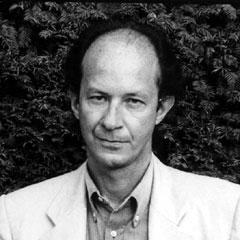
Giorgio Agamben
Giorgio Agamben

Giorgio Agamben is an Italian philosopher born on April 22, 1942. His research spans various fields including language, politics, aesthetics, and ethics, particularly known for his analyses of language, power, and the state of human existence. more

You May Also Like

“All this attending educational lectures and reading is greatly tempting, of course, and a great many would-be students spend their whole lives in such study. But in reality they have reached an unseen or unobserved impasse, and are merely milling around base camp and congratulating themselves and their fellow wayfarers on having achieved such dizzying heights.”

“Kritisk teori forstår seg selv som et bindeledd mellom teori og praksis. En verdsliggjøring av filosofien - rettere sagt en praksisfilosofi, praxis, hvor samfunnskritikk skal føre frem til frigjørende politisk handling.”

“New eyes awaken. I send Love's name into the world with wings And songs grow up around me like a jungle. Choirs of all creatures sing the tunes Your Spirit played in Eden. Zebras and antelopes and birds of paradise Shine on the face of the abyss And I am drunk with the great wilderness Of the sixth day in Genesis. But sound is never half so fair As when that music turns to air And the universe dies of excellence. Sun, moon and stars Fall from their heavenly towers. Joys walk no longer down the blue world's shore. Though fires loiter, lights still fly on the air of the gulf, All fear another wind, another thunder: Then one more voice Snuffs all their flares in one gust. And I go forth with no more wine and no more stars And no more buds and no more Eden And no more animals and no more sea: While God sings by himself in acres of night And walls fall down, that guarded Paradise.”

“O Love, divine Love, why do You lay siege to me? In a frenzy of love for me, You find no rest. From five sides You move against me, Hearing, sight, taste, touch, and scent. To come out is to be caught; I cannot hide from You. If I come out through sight I see Love Painted in every form and color, Inviting me to come to You, to dwell in You. If I leave through the door of hearing, What I hear points only to You, Lord; I cannot escape Love through this gage. If I come out through taste, every flavor proclaims: "Love, divine Love, hungering Love! You have caught me on Your hook, for you want to reign in me." If I leave through the door of scent I sense You in all creation; You have caught me And wounded me through that fragrance. If I come out through the sense of touch I find Your lineaments in every creature; To try to flee from You is madness. Love, I flee from You, afraid to give You my heart: I see that You make me one with You, I cease to be me and can no longer find myself. If I see evil in a man or defect or temptation, You fuse me with him, and make me suffer; O Love without limits, who is it You love? It is You, O Crucified Christ, Who take possession of me, Drawing me out of the sea to the shore; There I suffer to see Your wounded heart. Why did You endure the pain? So that I might be healed.”

“The Father's love does not force itself on the beloved. Although he wants to heal us of all our inner darkness, we are still free to mate our own choice to stay in the darkness or to step into the light of God's love. God is there. God's light is there. God's forgiveness there. God's boundless love is there. What is so clear is that God is always there, always ready to give and forgive, absolutely independent of our response. God's love does not depend on our repentance or our inner or outer changes.”

“As long as we practice with a vow to help others, we are the Bodhisattva of Great Compassion, and we become the leading figure in the Heart Sutra, whether we are a layperson or are ordained, whether celibate or married, living in the monastery or living in secular society.”

“As long as we practice with a vow to help others, we are the Bodhisattva of Great Compassion, and we become the leading figure in the Heart Sutra, whether we are a layperson or are ordained, whether whether celibate or married, living in the monastery or living in secular society.”

“The final disappearing act of the great magician, the great medicine itself, is that a correct view of emptiness prevents even emptiness from being the final source of clinging. The point is that we have nothing to hold on to – not the world of forms and differentiation, not the formless realm of oneness, and not even the dissolving method of emptiness. „Gone, gone, gone beyond, gone utterly beyond, hail awakening“ as the Heart Sutra pronounces. (p. 204)”